






China is emerging from its century of humiliation.
And Europe?
By Louis Perez y Cid
There are nations that view their history as a memory. And then there are those that make it a policy. China clearly belongs to the second category.
To understand the Chinese power unfolding today, it is not enough to look at its factories, its technology companies, or its aircraft carriers. One must look back to the 19th century and understand this expression that remains at the heart of the Chinese national narrative: the "century of humiliation," bǎinián guóchǐ — 百年国耻.
From approximately 1839 to 1949, China experienced a succession of defeats, foreign interventions, territorial concessions, and infringements on its sovereignty. The Opium Wars, unequal treaties, foreign concessions, defeat at the hands of Japan, the Japanese invasion, and then the civil wars tell the story of a country that, for a century, ceased to be master of its own destiny.
The trauma began with the Opium Wars. Read more...
Puyloubier, PK0 of Legionnaire Solidarity 4/4
By Louis Perez y Cid
Some Foreign Legion Veterans Associations are based near a regiment, while others are located far from any unit, sometimes even abroad. Yet they all share the essential goal of fostering, maintaining, and passing on the solidarity that unites those who served under the white kepi.
The Puyloubier, Pays d’Aix, and Sainte-Baume Veterans Association has a unique characteristic: its headquarters are located at the Capitaine Danjou estate in Puyloubier, at the very heart of the Foreign Legion Veterans' Institution.
This location is not merely geographical. It carries significant meaning.
For the Puyloubier Institution is not like any other. It was founded in 1954, in the aftermath of the Indochina War, when the French Foreign Legion had just paid a heavy price: nearly 12,000 dead, in addition to thousands wounded and disabled... Read more...
PK0 of Legionary Solidarity
3/4
Is the Captain Danjou estate in Puyloubier legitimate?
By Christian Morisot *
Every man is unique, irreplaceable. Each knows something that no other knows and can, therefore, offer others the fruit of their own unique experience.
It is because each of us is inimitable, while sharing the same human condition, that each needs everyone and everyone needs each other. Perhaps this is the true nature of brotherhood: the need for others.
If this brotherhood did not exist, no one would truly need anyone, since we could only do for others what we are capable of doing for ourselves. There would then be neither help nor assistance, but only an eternal replacement.
Fortunately, for us legionnaires, history offers us another truth, firmly established: that of solidarity. Read more...
PK0 of Legionary Solidarity
2/4
The Marker Too Many
By Jean-Marie DIEUZE
In our green and red microcosm, there's a rather fascinating reflex.
Someone has an idea.
Let's face it, that's not so common.
Even more surprising: they decide to carry it out.
That's where things get complicated, of course.
Because immediately, those who could have had the same idea before them appear.
But who didn't.
A president of a veterans' association thus conceived the idea of placing a small marker in front of his association's premises, within the Foreign Legion Veterans' Institution itself.
Not a monument.
Not a triumphal arch... Read more...
PK0 of Legionary Solidarity
1/4 The Original Tale
By Christian Morisot
For several years, I wrote Christmas stories for Képi Blanc. It was a true intellectual preparation for me, where emotion was expressed through anecdotes often drawn from my own experience, enhanced by the human warmth so well suited to the unique atmosphere of this great Legion celebration. I always took great pleasure in complementing these stories with the inspired and talented illustrations created by my friend Louis Perez y Cid.
That year, however, I was suffering from writer's block. I was out of breath. Too many worries had clouded that natural inclination that allows one to dream, to imagine, and, above all, to tell stories.
And so I found myself amidst the vineyards in Puyloubier, on a long, solitary walk, seeking inspiration at every step and perhaps also searching for that famous "lost time." Read more...
July 14, 2026
The day Europe began to think of itself as a power again
By Louis Perez y Cid
July 14, 2026, may well go down in history as more than just a French national holiday.
The armies of the European Union member states marched down the Champs-Élysées, joined by several allied democracies. A rare sight. A powerful image. Even more so, an unusual image: that of a West capable of showing unity without the American presence.
Of course, no treaty was signed that day. No European federal state was born. Yet, symbols matter in politics. And some symbols sometimes herald changing times.
For behind this parade lies a question that Europeans have been avoiding for nearly eighty years: can Europe ensure its own security and its own destiny?
To understand what this July 14 reveals, we must revisit a historical paradox. For centuries, Europe was the center of the world. Its ships sailed the oceans. Its empires dominated several continents. Its universities produced knowledge. Its armies imposed the international balance of power. Its ideas, from democracy to the Industrial Revolution, shaped the future of humanity... Read more...
A Sister Among the Legionnaires
By Louis Perez y Cid
"There are days when the Legion welcomes schoolchildren. There are even rarer days when it welcomes a Dominican nun singing 'To the Legionnaires' on the roads of Puyloubier." Yes, there are encounters that no regulations had foreseen.
So, when Sister Marie du Rosaire, a teacher at the Dominican school in La Celle, near Brignoles, announced her intention to visit the IILE (International Legion Training Institute) with about ten boys (11 years old) and three accompanying mothers, some might have raised an eyebrow. A nun, schoolchildren, and the Foreign Legion—the combination was not a given.
Captain Skolik, director of the IILE, nevertheless granted her this visit without hesitation. It must be said that Sister Marie had a solid passport to enter the Legion family; her father is none other than Colonel Brière, a former member of the Legion and a long-time friend.
A few days before the visit, the colonel called me.
“Will you be able to keep an eye on their walk around the grounds?” I reassured him immediately. Guy Cely, vice-president of our Puyloubier veterans' association, and I would supervise the activity from start to finish. I didn't know Sister Marie personally, but she already belonged to that vast, invisible kinship known as the Legionary family. This creates certain obligations... Read more...

Tintin in Jules Verne's World
The Legacy of an Imaginary Adventure
By Louis Perez y Cid
Published in 1998 by Jean-Paul Tomasi and Michel Deligne, Tintin in Jules Verne's World offers a fascinating reading of Hergé's work through the lens of Verne's legacy. More than a simple search for similarities or influences, this book illuminates a genuine artistic lineage between two creators who profoundly marked the history of adventure stories.
At first glance, everything seems to separate Jules Verne and Hergé. The former is a 19th-century novelist, a pioneer of scientific literature and grand imaginary voyages.
The latter is a 20th-century comic book author, creator of a reporter who became one of the major figures of European popular culture.
Yet, by exploring their respective works, Tomasi and Deligne reveal a surprising intellectual and creative kinship. Read more...
Published in 1998 by Jean-Paul Tomasi and Michel Deligne, Tintin in Jules Verne's World offers a fascinating reading of Hergé's work through the lens of Verne's legacy. More than a simple search for similarities or influences, this book illuminates a genuine artistic lineage between two creators who profoundly marked the history of adventure stories.
At first glance, everything seems to separate Jules Verne and Hergé. The former is a 19th-century novelist, a pioneer of scientific literature and grand imaginary voyages.
The latter is a 20th-century comic book author, creator of a reporter who became one of the major figures of European popular culture.
Yet, by exploring their respective works, Tomasi and Deligne reveal a surprising intellectual and creative kinship. Read more...

De-Westernization
The Twilight of a Center, the Dawn of a World
By Louis Perez y Cid
There are moments in history when the world's tectonic plates shift silently. Contemporaries continue to live as they did yesterday, to think as they did yesterday, to use the same words, without always perceiving that the order to which they were accustomed is slowly fading beneath their feet.
We are living through one of these moments.
For nearly five centuries, the West has occupied a unique position in human history. Through conquest, trade, the Industrial Revolution, military power, technological mastery, and cultural dominance, it has shaped a large part of the global narrative. Its values have aspired to be universal. Its artistic references have become standards. Its view of the world has often been synonymous with the world itself.
And now, this center of gravity is shifting.
What geopolitician Didier Billion calls "de-Westernization" heralds neither catastrophe nor revenge. He describes a deeper phenomenon: the gradual end of a historical centrality. Not the disappearance of the West, but the loss of its symbolic monopoly.
This distinction is essential... Read more...
There are moments in history when the world's tectonic plates shift silently. Contemporaries continue to live as they did yesterday, to think as they did yesterday, to use the same words, without always perceiving that the order to which they were accustomed is slowly fading beneath their feet.
We are living through one of these moments.
For nearly five centuries, the West has occupied a unique position in human history. Through conquest, trade, the Industrial Revolution, military power, technological mastery, and cultural dominance, it has shaped a large part of the global narrative. Its values have aspired to be universal. Its artistic references have become standards. Its view of the world has often been synonymous with the world itself.
And now, this center of gravity is shifting.
What geopolitician Didier Billion calls "de-Westernization" heralds neither catastrophe nor revenge. He describes a deeper phenomenon: the gradual end of a historical centrality. Not the disappearance of the West, but the loss of its symbolic monopoly.
This distinction is essential... Read more...
Islam,
or the Test of European Consciences
By Louis Perez y Cid
There are debates that, beneath a veneer of obviousness, conceal a deeper confusion. Islam is one of these, less a clearly defined object than a revealer of the uncertainties of our time.
In Europe, it has become difficult to speak of Islam without succumbing to the sterile alternative of either idealism or denunciation. As the word gains prominence in the public sphere, it seems to lose in precision what it gains in emotional charge. It designates, by turns, a faith, a culture, a civilization, sometimes a threat, and ultimately, through its contradictory uses, becomes nothing more than a sign of our own anxieties.
Yet, any serious reflection presupposes, first and foremost, an effort at distinction.
Islam is, in principle, a religion. As such, it involves beliefs, practices, and a relationship to the sacred. But, like the great religious traditions throughout history, it is not limited to this inner dimension; it is also embedded in social forms, legal legacies, and political structures... Read more...
There are debates that, beneath a veneer of obviousness, conceal a deeper confusion. Islam is one of these, less a clearly defined object than a revealer of the uncertainties of our time.
In Europe, it has become difficult to speak of Islam without succumbing to the sterile alternative of either idealism or denunciation. As the word gains prominence in the public sphere, it seems to lose in precision what it gains in emotional charge. It designates, by turns, a faith, a culture, a civilization, sometimes a threat, and ultimately, through its contradictory uses, becomes nothing more than a sign of our own anxieties.
Yet, any serious reflection presupposes, first and foremost, an effort at distinction.
Islam is, in principle, a religion. As such, it involves beliefs, practices, and a relationship to the sacred. But, like the great religious traditions throughout history, it is not limited to this inner dimension; it is also embedded in social forms, legal legacies, and political structures... Read more...
Joan of Arc
The Voice of God or the Reason of a Kingdom?
By Louis Perez y Cid
Joan of Arc died burned at the stake on May 30, 1431. 595 years ago. Joan's life inevitably brings to mind the Hundred Years' War. But who was Joan of Arc really?
The so-called Hundred Years' War was far from a straightforward conflict between two well-defined nations. It was also a war of legitimacy, factions, and shifting alliances. The Kingdom of France was then fractured between the supporters of the Dauphin Charles, the future Charles VII, backed by the Armagnacs, and the Burgundians allied with the English, who controlled a large part of the north of the country and the Aquitaine coast. Paris itself was under their control.
The Treaty of Troyes, signed in 1420 during the reign of Charles VI, added a major political twist to this dynastic confusion: the King of France recognized the King of England as heir to the French crown, effectively disinheriting the Dauphin.
The question of legitimacy was no longer merely political; it became almost metaphysical. Who was the true king? Read more...
Joan of Arc died burned at the stake on May 30, 1431. 595 years ago. Joan's life inevitably brings to mind the Hundred Years' War. But who was Joan of Arc really?
The so-called Hundred Years' War was far from a straightforward conflict between two well-defined nations. It was also a war of legitimacy, factions, and shifting alliances. The Kingdom of France was then fractured between the supporters of the Dauphin Charles, the future Charles VII, backed by the Armagnacs, and the Burgundians allied with the English, who controlled a large part of the north of the country and the Aquitaine coast. Paris itself was under their control.
The Treaty of Troyes, signed in 1420 during the reign of Charles VI, added a major political twist to this dynastic confusion: the King of France recognized the King of England as heir to the French crown, effectively disinheriting the Dauphin.
The question of legitimacy was no longer merely political; it became almost metaphysical. Who was the true king? Read more...

French Identity: Heritage, Demands, and Will
By Louis Perez y Cid
They come from elsewhere, sometimes barely speak the language, and yet they choose to serve France. Their commitment raises a simple question: what makes someone French today?

What does it mean to be French today?
The question keeps recurring, like a poorly formulated concern. It arises in political debates, in everyday conversations, and sometimes in silences. As France becomes more diverse, some see it as an asset, others as a dilution. But ultimately, do we still know how to define what unites us? Read more...
French Patriotism,
3/3 Embracing It
Trilogy by Louis Perez y Cid
Patriotism is back in the news. It's being discussed, nuanced, and placed within its historical context. By constantly explaining it, we forget its essential point: it is an obligation.
Loving a country isn't simply about understanding it, or even criticizing it. It requires accepting its rules, sharing its language, and recognizing its history, not as a burden, but as a form of expression.
The rest is merely vague attachment.
A nation is held together neither by diffuse feelings nor by abstract principles. It is held together by concrete demands, sometimes binding, often debatable, but never optional... Read more...
Patriotism is back in the news. It's being discussed, nuanced, and placed within its historical context. By constantly explaining it, we forget its essential point: it is an obligation.
Loving a country isn't simply about understanding it, or even criticizing it. It requires accepting its rules, sharing its language, and recognizing its history, not as a burden, but as a form of expression.
The rest is merely vague attachment.
A nation is held together neither by diffuse feelings nor by abstract principles. It is held together by concrete demands, sometimes binding, often debatable, but never optional... Read more...
French Patriotism,
2/3 Rebuilding
Trilogy by Louis Perez y Cid
One might have thought the question of patriotism relegated to the background, like an old, almost embarrassing matter. Yet it returns, unannounced, as the world hardens.
War has once again reached the borders of Europe. Balances are shifting, uncertainties are taking hold, and what seemed certain—peace, stability, a sense of belonging—is once again an open question.
In this context, patriotism ceases to be an abstract idea. It becomes a concrete question again, no longer just about where we come from, but about what we hold dear.
Read more...
One might have thought the question of patriotism relegated to the background, like an old, almost embarrassing matter. Yet it returns, unannounced, as the world hardens.
War has once again reached the borders of Europe. Balances are shifting, uncertainties are taking hold, and what seemed certain—peace, stability, a sense of belonging—is once again an open question.
In this context, patriotism ceases to be an abstract idea. It becomes a concrete question again, no longer just about where we come from, but about what we hold dear.
Read more...
French Patriotism,
1/3 Understanding
Trilogy, by Louis Perez y Cid
A foreigner and still a student, I had been in France for barely a year when May 1968 erupted. In Paris and then Strasbourg, I discovered an intensely politicized country, where the words "left" and "right" recurred like an enigma to which I had no key.
I watched this upheaval with quiet irony. It was only later that I understood that here, even the dispute reveals something about attachment to the country.
A foreigner and still a student, I had been in France for barely a year when May 1968 erupted. In Paris and then Strasbourg, I discovered an intensely politicized country, where the words "left" and "right" recurred like an enigma to which I had no key.
I watched this upheaval with quiet irony. It was only later that I understood that here, even the dispute reveals something about attachment to the country.
The Rupture
May '68 transcended France, but it was not limited Read more...
DIEN BIEN PHU
Why We Hold On
By Louis Perez y Cid
The Battle of Dien Bien Phu remains in the French memory as much more than a military defeat. It remains both the symbol of a colonial war that the political powers could no longer truly sustain, a major strategic catastrophe, but also an extraordinary act of resistance and endurance.
From March 13 to May 7, 1954, in a remote valley in Tonkin, thousands of men held out under fire, mud, and exhaustion. French soldiers, legionnaires, paratroopers, North African riflemen, African soldiers, and allied Vietnamese troops lived for fifty-seven days in almost continuous hell.
Bombings pounded the positions day and night. Airstrips were destroyed. The wounded were crammed into makeshift shelters flooded with rain and mud. Supplies became increasingly unreliable.
Each position fell slowly, piece by piece, amidst the stench of gunpowder, blood, and churned earth.
And yet, they held on.
Many knew that victory was becoming almost impossible. They saw the lines closing, ammunition running low, faces growing gaunt. They knew the valley had become a trap.
But the fighting continued... Read more...
The Battle of Dien Bien Phu remains in the French memory as much more than a military defeat. It remains both the symbol of a colonial war that the political powers could no longer truly sustain, a major strategic catastrophe, but also an extraordinary act of resistance and endurance.
From March 13 to May 7, 1954, in a remote valley in Tonkin, thousands of men held out under fire, mud, and exhaustion. French soldiers, legionnaires, paratroopers, North African riflemen, African soldiers, and allied Vietnamese troops lived for fifty-seven days in almost continuous hell.
Bombings pounded the positions day and night. Airstrips were destroyed. The wounded were crammed into makeshift shelters flooded with rain and mud. Supplies became increasingly unreliable.
Each position fell slowly, piece by piece, amidst the stench of gunpowder, blood, and churned earth.
And yet, they held on.
Many knew that victory was becoming almost impossible. They saw the lines closing, ammunition running low, faces growing gaunt. They knew the valley had become a trap.
But the fighting continued... Read more...
May Day Traditions
By Louis Perez y Cid
Every spring, May 1st returns with its well-established rituals.
In the streets, lilies of the valley are exchanged, processions are organized, and slogans are repeated. Officially, it is Labor Day. But on closer inspection, this obvious fact is recent, almost superficial.
For before being a day of protest, May 1st was a celebration.
A celebration of renewal, first and foremost.
In ancient Europe, this day was celebrated as a promise: the promise of returning spring, of lands blooming anew, of hearts opening. May trees were planted in front of houses, like so many silent declarations. Flowers were given. Love and nature were sung under a sky still imbued with a sense of the sacred.
The Church itself associated the figure of Saint Joseph, the humble craftsman, with the tradition, reminding us that work was not primarily a struggle, but a human condition, inscribed within a larger order.
Then came the rupture... Read more...
Camerone 2026
By Louis Perez y Cid
One might think that a ceremony is repeated. That it obeys a fixed, immutable, almost mechanical rite. But this is only true for those who observe it from afar. From the inside, Camerone is anything but a repetition. It is a rupture in time. A day that escapes its own chronology.
I have placed on this site two texts by foreign officers. Two ways of saying the same thing without ever quite converging. One, by Antoine Marquet, lingers on the signs, on the figures highlighted, on the way an institution tells its own story.
The other, by Jean Marie Dieuze, speaks of silence, of this strange suspension where the Legion recognizes itself in its dead as much as in its living. Two writings, two distances, and yet the same attempt: to understand what, each year, returns without ever allowing itself to be confined.
But there are times when analysis simply isn't enough.
For me, Camerone 2026 had a particular intensity. First, there was this convergence of lives. I had crossed paths, in other periods of service, with General Thierry Burkhard, as well as Warrant Officers Jörgen Madsen and Luigi Da Pont. ...Read more...
When Violence Overflows Understanding What Makes People Cross the Line
By Louis Perez y Cid
In certain contexts, the line between civilian and combatant blurs. October 7, 2023, was a brutal illustration of this. But these shifts don't arise from nowhere; they are part of human, social, and political dynamics that history, as well as field experience, helps to illuminate. Understanding them is not excusing, but refusing to view violence without clear-sightedness.
In certain contexts, the line between civilian and combatant blurs. October 7, 2023, was a brutal illustration of this. But these shifts don't arise from nowhere; they are part of human, social, and political dynamics that history, as well as field experience, helps to illuminate. Understanding them is not excusing, but refusing to view violence without clear-sightedness.
The Mechanisms of Violence, Beyond Emotion
The attacks of October 7, 2023, shocked people with their brutality. But beyond the legitimate emotion, they raise a broader question, essential for anyone interested in conflicts: how do ordinary individuals come to participate in extreme violence, sometimes against civilians?
Contrary to a reassuring notion, this phenomenon is neither new nor exceptional. History is replete with examples of civilians participating in massacres, in the Balkans, Rwanda, and other conflicts where the lines between combatants and non-combatants become blurred.
Hannah Arendt's work demonstrated that mass violence is not solely based on "monsters," but on ordinary mechanisms.
Stanley Milgram, for his part, showed how readily individuals can obey authority, even when it means harming others...Read more...
Contrary to a reassuring notion, this phenomenon is neither new nor exceptional. History is replete with examples of civilians participating in massacres, in the Balkans, Rwanda, and other conflicts where the lines between combatants and non-combatants become blurred.
Hannah Arendt's work demonstrated that mass violence is not solely based on "monsters," but on ordinary mechanisms.
Stanley Milgram, for his part, showed how readily individuals can obey authority, even when it means harming others...Read more...
When Humiliation Becomes a Driving Force
By Louis Perez y Cid
From Hannah Arendt to Stanley Milgram, we know that ordinary people can be driven to violence by circumstances. With Ervin Staub, another reality emerges: it is not only orders or systems that lead to violence, but the slow accumulation of wounds, humiliations, and injustices. Where social bonds break down, radicalism finds fertile ground.
There is no easy mystery. Violence does not spontaneously arise. Only trajectories.
Persistent poverty, physical or mental confinement, repeated trauma, a sense of injustice—these factors do not mechanically produce perpetrators, but they create vulnerabilities. And these vulnerabilities, when they encounter neither structure, nor recognition, nor a way out, can transform into anger, then into hatred.
Ervin Staub's work is unambiguous: collective violence rarely arises from a single shock. It is rooted in an accumulation. A slow sedimentation of frustrations, unhealed wounds, and victim narratives that ultimately structure a worldview. At this stage, violence no longer appears as a deviation, but as a response... Read more...
From Hannah Arendt to Stanley Milgram, we know that ordinary people can be driven to violence by circumstances. With Ervin Staub, another reality emerges: it is not only orders or systems that lead to violence, but the slow accumulation of wounds, humiliations, and injustices. Where social bonds break down, radicalism finds fertile ground.
There is no easy mystery. Violence does not spontaneously arise. Only trajectories.
Persistent poverty, physical or mental confinement, repeated trauma, a sense of injustice—these factors do not mechanically produce perpetrators, but they create vulnerabilities. And these vulnerabilities, when they encounter neither structure, nor recognition, nor a way out, can transform into anger, then into hatred.
Ervin Staub's work is unambiguous: collective violence rarely arises from a single shock. It is rooted in an accumulation. A slow sedimentation of frustrations, unhealed wounds, and victim narratives that ultimately structure a worldview. At this stage, violence no longer appears as a deviation, but as a response... Read more...
Obedience: How Far Can It Go?
By Louis Perez y Cid
We like to believe that executioners are monsters.
Apart beings, deviant, recognizable. This idea is reassuring. It draws a clear line between good and evil, between “them” and “us.” Above all, it allows us to avoid questioning things too much.
The work of Stanley Milgram shattered this illusion.
In the 1960s, Milgram staged a simple experiment. An ordinary man had to administer electric shocks to a stranger every time the latter made a mistake. The shocks increased. So did the protests. Then silence.
In the room, a calm, legitimate authority figure insisted, “Continue.”
Most obeyed.
Not out of cruelty. Not out of hatred. But because a framework had been established, a hierarchy put in place, an order given.
What Milgram reveals echoes, in a different form, Hannah Arendt's intuition: evil does not always arise from the violence of passions, but from the erasure of conscience behind function.
One no longer acts. One executes... Read more...
Simply Serving the Legion
By Louis Perez y Cid
There are some paths that some view with reservation. Wrongly so.
The man in question here was born in 1944 in Algiers. His adolescence was profoundly marked by the events in Algeria, in an environment where the military presence was omnipresent. Drawn to light aviation from a young age, he was trained by former fighter pilots—P-47s, Skyraiders of the Lafayette Escadrille, B-26s, Noratlases—who indelibly shaped his perspective.
Repatriation to France marked a turning point. His bearings changed, and his studies continued in a sometimes difficult context. He ultimately turned to dental studies, influenced along the way by a professor who had served with the Commandos d'Afrique, a man of high standards and commitment.
When it came time for his military service, he chose the Reserve Officer Training School (EOR Santé). His assignment to the 1st Foreign Regiment in Aubagne was a close call; a position became available. This would prove decisive.
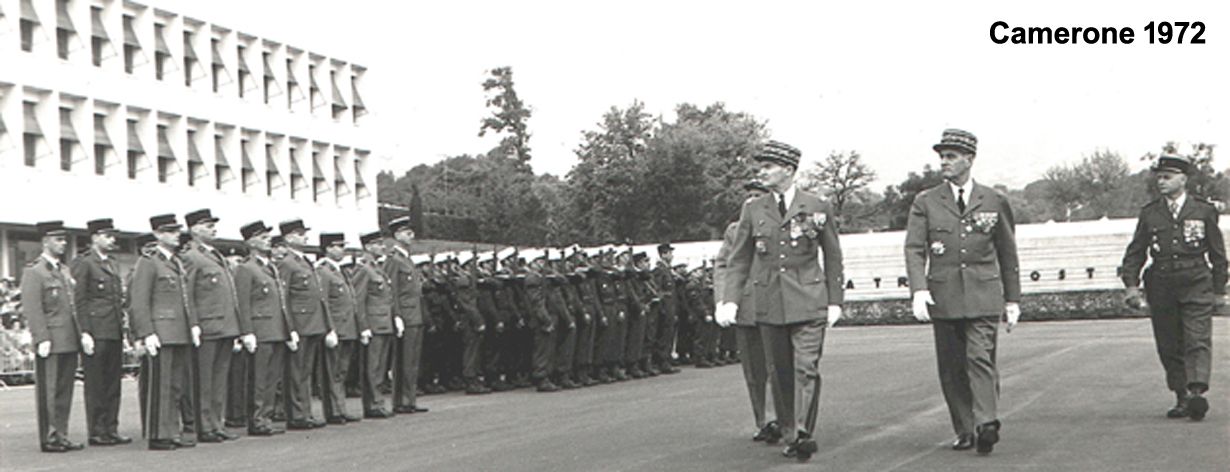
Through what he himself calls a "back door," Cadet Jean-Michel Pajot joined the Legion. He wore the uniform, participated in the 1972 Camerone Day ceremony, and, above all, discovered the Legion from the inside. A short but formative experience. It instilled in him a real and lasting sense of belonging... Read more...
THE POPE AND THE IMAGINARY EMPIRE
By Louis Perez y Cid
Talking about the Pope on a Legion website might seem surprising.
And yet, in the Legion, no major ceremony begins or ends without a Mass.
Between the silence of arms and the sacred word, there is no contradiction, but rather an age-old tradition. It is from this balance that certain words, even those from the distant past, find a particular resonance here.
Sometimes, a single sentence uttered on a television set is enough to bring an entire century back to life.
In recent days, during a debate, some have seen in the verbal tension between the Pope and the President of the United States an echo of another confrontation, that which pitted John Paul II against the Soviet Union.
The image is striking. It is even reassuring. A Pope, a power, a moral voice facing an empire. And, at the end of the story, the promise of a fall.
But history doesn't repeat itself at the behest of the media.
After all, what are we comparing?...Read more...
Mexico,
Behind Camerone, the Imperial Illusion
By Louis Perez y Cid
Some battles enlighten, and others blind.
At the Battle of Camerone, the French Foreign Legion etched a memory of loyalty and sacrifice. No doubt about it. Nothing to take back.
But by focusing so intently on this incandescent point, we almost forget to look around. What was France doing in Mexico?
Officially, it wasn't alone. The expedition began as a coalition: France, Spain, and the United Kingdom landed in 1861 to force Mexico to honor its debts. A matter of creditors, almost commonplace in the 19th century of empires.
But very quickly, everything changed.
The Spanish and the British understood that the real objective went far beyond financial recovery. They withdrew. France, however, stayed. Why?
Because behind the accounting operation lay a political project, that of Napoleon III. Establishing a Catholic, Latin empire in America, capable of counterbalancing the rising power of the United States. A strategic idea, almost brilliant on paper. But disconnected from reality.
Mexico wasn't waiting for a throne. It was emerging from a civil war. It was riddled with deep divisions. And above all, it already had a president, Benito Juárez, who had no intention of ceding his country to a European construct. So France was sinking, and with it, an illusion. ...Read more...
Some battles enlighten, and others blind.
At the Battle of Camerone, the French Foreign Legion etched a memory of loyalty and sacrifice. No doubt about it. Nothing to take back.
But by focusing so intently on this incandescent point, we almost forget to look around. What was France doing in Mexico?
Officially, it wasn't alone. The expedition began as a coalition: France, Spain, and the United Kingdom landed in 1861 to force Mexico to honor its debts. A matter of creditors, almost commonplace in the 19th century of empires.
But very quickly, everything changed.
The Spanish and the British understood that the real objective went far beyond financial recovery. They withdrew. France, however, stayed. Why?
Because behind the accounting operation lay a political project, that of Napoleon III. Establishing a Catholic, Latin empire in America, capable of counterbalancing the rising power of the United States. A strategic idea, almost brilliant on paper. But disconnected from reality.
Mexico wasn't waiting for a throne. It was emerging from a civil war. It was riddled with deep divisions. And above all, it already had a president, Benito Juárez, who had no intention of ceding his country to a European construct. So France was sinking, and with it, an illusion. ...Read more...
AALE
The Famous Women's Section
By Louis Perez y Cid
Apparently, there are women.
The news is circulating, half amused, half scandalized. People smile, snicker, and are already making judgments. The term "women's section" is thrown around like an administrative anomaly or a lapse in taste.
We know a lot. Except, precisely, what it's about.
So, before judging, perhaps we should have looked.
But looking forces us to understand. And understanding, sometimes, is unsettling.
Apparently, there are women.
The news is circulating, half amused, half scandalized. People smile, snicker, and are already making judgments. The term "women's section" is thrown around like an administrative anomaly or a lapse in taste.
We know a lot. Except, precisely, what it's about.
So, before judging, perhaps we should have looked.
But looking forces us to understand. And understanding, sometimes, is unsettling.
An association like any other, or almost.
Each association is a territory. A geography, its members, its customs. Some live in the shadow of a regiment, others survive in the isolation of a department, or even a foreign country. Yet all pursue the same goal: to strengthen bonds, maintain camaraderie, and promote the Legion.
At the Puyloubier Veterans' Association, at Captain Danjou's estate, at the Institution des Invalides, nothing more is being done. But it's being done differently. And above all, it's being done quietly.
Contrary to what some might imagine, nothing here has been abandoned. Neither the spirit, nor the high standards, nor the hierarchy of responsibilities. Reality has simply taken hold, and it never asks for permission. ... Read more...
The Legion Family
By Louis Perez y Cid
One must be wary of words spoken too often. They eventually lose their weight.
"Legion family" is one of them. It is invoked, claimed, sometimes even adorned. But what exactly are we talking about?
For a family cannot be decreed. It is built, slowly, over time, through hardship, through a loyalty that is non-negotiable. The family of the French Foreign Legion did not come from nowhere. It is the fruit of nearly two centuries of history, of battles, of sacrifices made by men who, for the most part, had nothing in common except a decision: to serve.
Very early on, leaders understood that this diversity was both a potential weakness and a strength to be overcome. They chose to forge it into cohesion.
Colonel Bernelle, in 1835, established a foundational principle. In a situation of disorder and defection, he imposed the amalgamation of nationalities and a single language, French. This was not an administrative measure. It was a vision: to forge unity where everything could divide.
A century later, General Rollet gave substance to this unity. It was no longer simply a matter of fighting together, but of fostering belonging. He structured traditions, shaped a spirit, and inscribed the Legion in the long term. He transformed a troop into an institution, and an institution into a legacy.
Then General Coullon, by establishing, in particular, the Legionnaire's code of honor, clarified what must remain constant. In a changing world, he drew lines. He reminded everyone that the essential lies not in the words themselves, but in what they compel. ...Read more...
The Family Tested by Time
Between Continuity and the Acceleration of the World
By Louis Perez y Cid
The family doesn't disappear; it ceases to be taken for granted.
The family doesn't disappear; it ceases to be taken for granted.
A Contested Obviousness
We talk a lot about the family. About its fragility, its predicted end, its irreversible transformation. The subject recurs like a deep-seated anxiety, almost a refrain. And yet, behind the words, there is more than just a contemporary debate; there is an attachment. A loyalty.
For, after all, if the family had truly become obsolete, why would we continue to invoke it everywhere? In businesses, in military units, in associations, as soon as cohesion and loyalty emerge, the word returns: "a family." We never compare it to something worthless. The family still provides reassurance. It remains a benchmark.
So perhaps the question isn't whether it's disappearing, but what within it is changing.
The Shift into the Ephemeral
For, after all, if the family had truly become obsolete, why would we continue to invoke it everywhere? In businesses, in military units, in associations, as soon as cohesion and loyalty emerge, the word returns: "a family." We never compare it to something worthless. The family still provides reassurance. It remains a benchmark.
So perhaps the question isn't whether it's disappearing, but what within it is changing.
The Shift into the Ephemeral
“Life has changed,” we say. It’s become a bland, almost lazy truism. Yet, we must take this statement seriously.
For a long time, human societies were built on longevity. Things were made to be passed down. A house, a trade, even a word, were meant to last. The world changed little, and humankind patiently found its place within it.
For a long time, human societies were built on longevity. Things were made to be passed down. A house, a trade, even a word, were meant to last. The world changed little, and humankind patiently found its place within it.
Then everything accelerated.
First the industrial age, then the globalized era, replaced the logic of permanence with a logic of renewal. We no longer repair, we replace. Not out of whim, but because it has become rational. Objects are designed to be obsolete. And what holds true for things always ends up affecting people.
We now live in a society of the ephemeral. Objects pass away, places pass away, and little by little,...Read more...
We now live in a society of the ephemeral. Objects pass away, places pass away, and little by little,...Read more...
Green and Red
The Traditional Colors of the French Foreign Legion
By Louis Perez y Cid
Sometimes we make a small sign in the Legion's colors, green and red. So far, so good; everyone knows that green comes first.
But as soon as we start talking about the diagonal… well, that's a different story. Certainties evaporate, glances are exchanged, and doubt creeps in.
That's when, inevitably, the resident expert appears, proudly brandishing their mnemonic device, which some even take for historical fact: "Blood flows on the plain."
Very well. Except that blood is red… and if it flows on the plain, shouldn't it be above it?
Silence. Hesitation. General questioning.
In short!
The Origin
These colors only very gradually entered the symbolism of the French Foreign Legion.
Originally, the dominant color of the legionnaire's uniform was green, dragon green.
This distinction was officially established in 1914, and it wasn't until 1959 that red was definitively added.
It should be noted, however, that the Foreign Legion had already been equipped with "green and red" epaulettes since 1868. Various texts dealing with symbolism or traditions have always remained vague regarding the arrangement of green and red on pennants, banners, aprons, streamers, or even simple two-tone signs... Read more...
Originally, the dominant color of the legionnaire's uniform was green, dragon green.
This distinction was officially established in 1914, and it wasn't until 1959 that red was definitively added.
It should be noted, however, that the Foreign Legion had already been equipped with "green and red" epaulettes since 1868. Various texts dealing with symbolism or traditions have always remained vague regarding the arrangement of green and red on pennants, banners, aprons, streamers, or even simple two-tone signs... Read more...
Speaking French to become a legionnaire?
Language, the primary tool for integration into the Foreign Legion
By Louis Perez y Cid
When a man first crosses the gate of the Foreign Legion Recruitment Group (G.R.L.E.), he often arrives with a bag, a past... and a language that few people around him understand. Nepalese, Polish, or even Mongolian, at the Legion, the origins are counted by the dozens.
Very quickly, however, all these men must learn to understand each other, to live together, and above all, to act together. On the field, in combat as well as in the daily life of the regiment, only one language is imposed on everyone: French.
At the Foreign Legion, learning French is not just a matter of integration. It is a necessity for cohesion, for discipline, and for operational efficiency. It is even one of the first challenges that every volunteer must face.
When a man first crosses the gate of the Foreign Legion Recruitment Group (G.R.L.E.), he often arrives with a bag, a past... and a language that few people around him understand. Nepalese, Polish, or even Mongolian, at the Legion, the origins are counted by the dozens.
Very quickly, however, all these men must learn to understand each other, to live together, and above all, to act together. On the field, in combat as well as in the daily life of the regiment, only one language is imposed on everyone: French.
At the Foreign Legion, learning French is not just a matter of integration. It is a necessity for cohesion, for discipline, and for operational efficiency. It is even one of the first challenges that every volunteer must face.
A priority for an army of 144 nationalities
The Foreign Legion is composed exclusively of foreigners. Today, no fewer than 144 nationalities are represented within its ranks. A large portion of the recruits arrive without speaking French, which inevitably creates communication difficulties right from the selection process, and especially during the initial training of the volunteers (E.V.).
However, the non-commissioned officers of the Legion come from this recruitment. And everyone knows that the non-commissioned officer corps constitutes the indispensable backbone of a regiment. ...Read more...
However, the non-commissioned officers of the Legion come from this recruitment. And everyone knows that the non-commissioned officer corps constitutes the indispensable backbone of a regiment. ...Read more...
The Presentation of the White Kepis
By Louis Perez y Cid
We marched in step, singing our section song, "Against the Viet Cong."
The night was pitch black. The parade ground was lit only by the torches carried by the legionnaires. Above us, the citadel was barely visible in the flickering halo of the torches.
An almost perfect silence reigned. There was only our song and the steady pounding of our boots.
We marched straight, heads held high, following the line of flames that marked our path. Everything had been calculated, timed to the second: the distance, the rhythm, the cadence.
The song was to end precisely as we entered the square formed by the "veteran" sections.
And so it did.
In impeccable, tight formation, rehearsed a hundred times, we took our places.
"Watch out!" The snap was sharp.
Bare heads straightened. Chests puffed out. Bellies tucked in. White kepis in their right hands, the section stood motionless.
We were about to receive the white kepi.
From the officers' square, our company commander stepped forward and stood facing us. Our lieutenant presented the section to him.
The captain spoke briefly. Just a few sentences. But they carried the particular weight of words spoken before men who have made their choice... Read more...
PYC'S EDITORIAL
At the request of my friends at Legion'arts, I am launching a new column today, "PYC's Editorial."
In this space, I will take up my pen to discuss current topics concerning the Legion, history, geopolitics, and many other themes that shape our era.
Some may be sensitive, sometimes even disturbing. But they will always be approached with an essential requirement: the facts.
I will take full responsibility for them, because writing also means accepting the responsibility for one's words.
Legion'arts does not endorse the opinions expressed here. But the site defends a fundamental principle: everyone's right to express their own.
And that is precisely where its strength lies.
Louis Perez y Cid
"The Legion doesn't ask where you come from, but only if you are ready to serve."
On March 10, 1831
The Creation of the Foreign Legion
On March 10, 1831, by royal decree, King Louis-Philippe officially created the French Foreign Legion.
The use of foreign soldiers was not a new phenomenon in French military history. Since the Ancien Régime, France had often called upon troops from elsewhere; Swiss, Germans, Irish, and Poles had long served under its flag.
These units, however, retained their own structures, traditions, uniforms, and sometimes even their national regulations.
The creation of the Foreign Legion marked a profound shift. The foreign volunteers who enlisted now relinquished all national military identity to adopt that of the French army. Organization, discipline, traditions—everything now linked them to the French infantry.
Thus emerged a new figure: the legionnaire. ... Read more...
The use of foreign soldiers was not a new phenomenon in French military history. Since the Ancien Régime, France had often called upon troops from elsewhere; Swiss, Germans, Irish, and Poles had long served under its flag.
These units, however, retained their own structures, traditions, uniforms, and sometimes even their national regulations.
The creation of the Foreign Legion marked a profound shift. The foreign volunteers who enlisted now relinquished all national military identity to adopt that of the French army. Organization, discipline, traditions—everything now linked them to the French infantry.
Thus emerged a new figure: the legionnaire. ... Read more...
Isabelle Maury,
an exceptional painter.
By Christian Morisot
Isabelle Maury is possessed by a passion for painting the French Foreign Legion, and more specifically, the legionnaire.
Her recent visit to Saumur left a particularly delicate and high-quality impression.
She discreetly expresses her position on bullfighting without taking a firm stance, and her paintings can be interpreted by both sides, for and against; everyone finds something to appreciate. However, there is no misunderstanding; Isabelle subtly conveys her message.
Isabelle Maury is possessed by a passion for painting the French Foreign Legion, and more specifically, the legionnaire.
Her recent visit to Saumur left a particularly delicate and high-quality impression.
She discreetly expresses her position on bullfighting without taking a firm stance, and her paintings can be interpreted by both sides, for and against; everyone finds something to appreciate. However, there is no misunderstanding; Isabelle subtly conveys her message.
_(1).jpg?t=aeb8a500_42ca_451a_ab7f_8e5528b4f20b)
Painting is not knowledge. Nor is it pleasure. Before experiencing it, the painter is plunged into darkness. He must emerge from it for the transgression of inventing objective and subjective forms to take place. It is projecting oneself into an inner universe while using the incorruptible world of visual reality.
Painting is about discovering the sensitivity to beauty, the kind that leads to an understanding of art and the uncertainty of the laws and criteria of beauty, which often remain unexplained.
“Isabelle” embodies intellectual beauty, expressed through a skillful blending of multiple color varieties, which a deliberate yet controlled indiscipline transforms into a work of art... Read more...
Painting is about discovering the sensitivity to beauty, the kind that leads to an understanding of art and the uncertainty of the laws and criteria of beauty, which often remain unexplained.
“Isabelle” embodies intellectual beauty, expressed through a skillful blending of multiple color varieties, which a deliberate yet controlled indiscipline transforms into a work of art... Read more...
.jpg?t=aeb8a500_42ca_451a_ab7f_8e5528b4f20b)
Calligraphy, the art of beautifully forming characters.
Calligraphy (from the Greek kallos = beauty, graphein = to write).
.jpg?t=aeb8a500_42ca_451a_ab7f_8e5528b4f20b)
It appeared as early as the first civilizations, in ancient Egypt with hieroglyphs, in China where it very quickly became a major art form (more than 2,000 years BCE), and then in the Islamic world where Arabic script took on a spiritual dimension.
In medieval Europe, copyist monks decorated manuscripts in scriptoria. The invention of printing in the 15th century reduced its utilitarian role, but it remained an art... Read more...
In medieval Europe, copyist monks decorated manuscripts in scriptoria. The invention of printing in the 15th century reduced its utilitarian role, but it remained an art... Read more...
THE LEGION MASS CENTER IN PUYLOUBIER
A Proud Legacy
By Louis Perez y Cid
The Legion Massacre Center in Puyloubier is not simply a burial ground. It is the direct heir to the memory of the Legion in Algeria and the spiritual extension of Sidi Bel Abbès.
Its history unfolds in two stages.
The Legion Massacre Center in Puyloubier is not simply a burial ground. It is the direct heir to the memory of the Legion in Algeria and the spiritual extension of Sidi Bel Abbès.
Its history unfolds in two stages.
1954: The Residents of the Institution for Disabled Veterans
The first stage dates back to 1954. The residents of the Institution for Disabled Veterans of the Foreign Legion (IILE), located in Puyloubier, were buried in the village's municipal cemetery.
These veterans, wounded by war or by life's hardships, found a dignified burial there, in keeping with the spirit of camaraderie characteristic of the Legion. At this stage, it is not yet the "Legion Square" in the historical sense of the term, but a resting place for veterans of the Institution.
These veterans, wounded by war or by life's hardships, found a dignified burial there, in keeping with the spirit of camaraderie characteristic of the Legion. At this stage, it is not yet the "Legion Square" in the historical sense of the term, but a resting place for veterans of the Institution.
1962: The transfer of the "Pantheon" from Sidi Bel Abbès
The true Legion Square was established after the departure from Algeria.
In 1962, the Legion definitively left Sidi Bel Abbès, its home base since 1843. It was then necessary to preserve the essential: the memory.
The ashes of the "Legion Pantheon" were transferred to mainland France, to Puyloubier.
• General Paul-Frédéric Rollet, a founding figure of the modern Legion.
• Prince Aage of Denmark, a Legion officer.
• Legionnaire Zimmermann, the last to be killed in Algeria
Their graves, known as "eternal" graves, are aligned along... Read more...
In 1962, the Legion definitively left Sidi Bel Abbès, its home base since 1843. It was then necessary to preserve the essential: the memory.
The ashes of the "Legion Pantheon" were transferred to mainland France, to Puyloubier.
• General Paul-Frédéric Rollet, a founding figure of the modern Legion.
• Prince Aage of Denmark, a Legion officer.
• Legionnaire Zimmermann, the last to be killed in Algeria
Their graves, known as "eternal" graves, are aligned along... Read more...
The Traditions of the French Foreign Legion.
The Fundamental Foundations
By Louis Perez y Cid
The traditions of the French Foreign Legion are an integral part of its heritage and culture. Forged empirically, they guarantee its identity and unity, and remain an essential factor in its integration and cohesion.
Some are very old and originate from customs predating the creation of the Foreign Legion (1831). Others are more recent; their adoption proves the Legion's ability to adapt to the times and demonstrates that these traditions are not static but are meant to evolve.
They nevertheless rest on a few immutable foundations that constitute their basis and contribute to ensuring their continuity.
The Four Fundamental Pillars.
Daily life, training, and operations are guided by four principles:
• The sacred nature of the mission.
• Rigor in execution.
• Solidarity.
• The veneration of remembrance.
A specific motto.
"Legio Patria Noatra"
The Legion respects the nationality of each legionnaire and will never force him to fight against his country of origin; this is stipulated in the enlistment contract.
However, it constitutes a "second homeland," firstly to unite all these men from different countries, secondly to serve as a shared culture, and finally to give them a cause to defend, a reason to fight, even to die. Read more...
However, it constitutes a "second homeland," firstly to unite all these men from different countries, secondly to serve as a shared culture, and finally to give them a cause to defend, a reason to fight, even to die. Read more...
_(1).jpg?t=aeb8a500_42ca_451a_ab7f_8e5528b4f20b)
Solidarity in the French Foreign Legion
By Louis Perez y Cid
Solidarity is not born of joy. It is born of pain. We feel closer to those with whom we have suffered than to those with whom we have succeeded. Happiness flatters the ego. Adversity, however, forges bonds between men. In every collective victory, a touch of bitterness creeps in. Each person assesses their contribution, compares themselves, sometimes feeling wronged. Families are torn apart over inheritances, groups fragment after success, movements disintegrate once power is seized. Triumph divides. Misfortune unites.
The cohesion of a core group is forged elsewhere, in the memory of a shared ordeal. It is there that the individual fades into the background, giving way to the body. In the French Foreign Legion, this memory has a name: Camerone.
It is not a happy myth. It is a defeat, an agony, a loyalty unto death. But this is precisely why it is the foundation of Legionary solidarity. Victory is not celebrated here, but sacrifice. Not success, but loyalty in the face of adversity.
The etymology states it plainly. Sympathy and compassion mean "to suffer with." In the Legion, solidarity is not an abstract feeling. It is a lived experience, passed down, and remembered. It is the invisible bond that unites those who have fallen, those who still suffer, and those who continue to serve.
This is why, in the history of the Legion, great acts of solidarity always arise after wars. After the mass graves of 1914, General Rollet worked for the wounded veterans, and following the financial crisis of 1929, the Legionnaire's House was built in Auriol. After 1945, Colonel Gaultier continued this fraternal work. And after Indochina, the war that General Coullon would call the "genocide of the French army," General Koenig gave the Legion the institution of the Invalides in Puyloubier, a refuge for the wounded and veterans.
Each time, the same logic prevailed: pain calls for mutual support. Loss calls for loyalty. Nothing is theoretical. Everything is visceral.
Read more...
_(1).jpg?t=aeb8a500_42ca_451a_ab7f_8e5528b4f20b)
The French Foreign Legion and Art
By Louis Perez y Cid
For over two centuries, military painting and sculpture have occupied a unique place in French artistic creation. Masters such as Horace Vernet (1789-1863), Édouard Detaille (1848-1912), and Alphonse de Neuville (1835-1885) shaped a true visual tradition where historical realism, the exaltation of courage, and the memory of battles intertwine. This lineage of artists gave rise to a powerful, often monumental, iconography that tells the story of both the evolution of the French army and the spirit of those who serve it.
Read more...

The Most Relevant Books
on the French Foreign Legion
By Louis Perez y Cid
The French Foreign Legion has always been a source of inspiration. For nearly two centuries, it has attracted the pens of historians, writers, journalists… but also those of former legionnaires themselves, who have committed to paper their memories of battles, friendships, and sacrifices. Through these books, the very soul of the Legion is transmitted, a blend of memory and legend.
Stories that make history.
It is difficult to speak of the Legion without mentioning these three reference works, which I consider essential for grasping the scope of the Legionary epic:
“Honor and Fidelity. That is the Legion” by Louis Gaultier and Charles Jacquot, former members of the Legion. Illustrations by Louis Frégier, 1963.
Published in three volumes for the centenary of Camerone, the authors invite us to explore the battles of this elite corps from its origins to the Algerian War of 1962.
"History of the Foreign Legion" by Georges Blond - 1981.
Published on the occasion of the 150th anniversary of the Legion's creation, it is both the most extraordinary adventure story and a century and a half of French history.
"The Foreign Legion 1831-1962" by Douglas Porch - 1991.
Published in the USA in English, and in 1994 for the French translation and preface. This fundamental and uncompromising study is a model of military history, tracing the evolution of the Legion from its creation in 1831 to modern operations.
The French Foreign Legion has always been a source of inspiration. For nearly two centuries, it has attracted the pens of historians, writers, journalists… but also those of former legionnaires themselves, who have committed to paper their memories of battles, friendships, and sacrifices. Through these books, the very soul of the Legion is transmitted, a blend of memory and legend.
Stories that make history.
It is difficult to speak of the Legion without mentioning these three reference works, which I consider essential for grasping the scope of the Legionary epic:
“Honor and Fidelity. That is the Legion” by Louis Gaultier and Charles Jacquot, former members of the Legion. Illustrations by Louis Frégier, 1963.
Published in three volumes for the centenary of Camerone, the authors invite us to explore the battles of this elite corps from its origins to the Algerian War of 1962.
"History of the Foreign Legion" by Georges Blond - 1981.
Published on the occasion of the 150th anniversary of the Legion's creation, it is both the most extraordinary adventure story and a century and a half of French history.
"The Foreign Legion 1831-1962" by Douglas Porch - 1991.
Published in the USA in English, and in 1994 for the French translation and preface. This fundamental and uncompromising study is a model of military history, tracing the evolution of the Legion from its creation in 1831 to modern operations.
.jpg?t=aeb8a500_42ca_451a_ab7f_8e5528b4f20b)
There are other books of very high quality, but I believe that with these three books you will understand what the French Foreign Legion truly is and how it has managed to endure through the ages.
The Legionnaires' Voices
Nothing equals the power of a personal account. Reading the memoirs of a veteran is to share their daily life: the hardship of the marches, the camaraderie in adversity, the moments of glory as well as the silent wounds. Accounts such as:
"Memories of Algeria 1840-1842" by Clement Lamping.
The German text was published in 1844 and then fell into oblivion. It was first published in French in 2000 by Bouchene. Originally from northern Germany, the author participated in various expeditions in the Algiers and Oran regions. His memoirs read like a meticulous and objective chronicle of the conquest. This is the oldest book by a legionnaire that I have ever read.
"I Am a Legionnaire" by Jean Martin, a legionnaire, with a preface by General Rollet.
Published in 1938 by Librairie Arthème Fayard, this book was written for his godmother during the war, Suzy Solidor, a singer, film actress (La Garçonne), and novelist.
"Le Légionnaire Flutsch," published by Librairie Plon in 1982, is written by Antoine Sylvère. The author, a legionnaire himself, is neither for nor against the Legion; it is the very essence of his book. He observes it as a man might examine his own body, noting its imperfections, its knotted muscles, its battered faces, but also its graces. It is the daily life of the Legion that he reveals to us. It's not the legion itself that interests Sylvère, but the men who made it up at the beginning of the 20th century.
I'm mentioning here the three books that particularly struck me.
There are many others, much more recent, such as "Carnet d'un légionnaire Mongol" (Diary of a Mongolian Legionnaire) by Oyunbat Baatartsogt, published by Amazon. It's a memoir of nine years of service in the French Foreign Legion (from 2010 to 2019).
The Legionnaires' Voices
Nothing equals the power of a personal account. Reading the memoirs of a veteran is to share their daily life: the hardship of the marches, the camaraderie in adversity, the moments of glory as well as the silent wounds. Accounts such as:
"Memories of Algeria 1840-1842" by Clement Lamping.
The German text was published in 1844 and then fell into oblivion. It was first published in French in 2000 by Bouchene. Originally from northern Germany, the author participated in various expeditions in the Algiers and Oran regions. His memoirs read like a meticulous and objective chronicle of the conquest. This is the oldest book by a legionnaire that I have ever read.
"I Am a Legionnaire" by Jean Martin, a legionnaire, with a preface by General Rollet.
Published in 1938 by Librairie Arthème Fayard, this book was written for his godmother during the war, Suzy Solidor, a singer, film actress (La Garçonne), and novelist.
"Le Légionnaire Flutsch," published by Librairie Plon in 1982, is written by Antoine Sylvère. The author, a legionnaire himself, is neither for nor against the Legion; it is the very essence of his book. He observes it as a man might examine his own body, noting its imperfections, its knotted muscles, its battered faces, but also its graces. It is the daily life of the Legion that he reveals to us. It's not the legion itself that interests Sylvère, but the men who made it up at the beginning of the 20th century.
I'm mentioning here the three books that particularly struck me.
There are many others, much more recent, such as "Carnet d'un légionnaire Mongol" (Diary of a Mongolian Legionnaire) by Oyunbat Baatartsogt, published by Amazon. It's a memoir of nine years of service in the French Foreign Legion (from 2010 to 2019).
.jpg?t=aeb8a500_42ca_451a_ab7f_8e5528b4f20b)
Biographies of Legion veterans.
It's difficult to talk about the Legion without mentioning the highly emblematic General Rollet.
"Paul-Frédéric Rollet: Father of the Foreign Legion" by Pierre Soulié.
Published by the French Foreign Legion Command. Published by Italiques, 2001. This remarkable work, the fruit of ten years of research by the author under the auspices of the French Foreign Legion, was first published in the pages of the magazine Képi Blanc before being compiled into a single 730-page volume.
From the 19th century until recently, only the biographies of high-ranking officers interested authors.
For the past few years, Lieutenant Colonel Mickaël De Prat, a former Legionnaire and member of Légion'Arts, has dedicated himself to retracing the lives of Legionnaires who were direct participants in the Second World War, the Indochina War, and the Algerian War.
I invite you to browse the Comics & Books section of this website to discover all his works.
It's difficult to talk about the Legion without mentioning the highly emblematic General Rollet.
"Paul-Frédéric Rollet: Father of the Foreign Legion" by Pierre Soulié.
Published by the French Foreign Legion Command. Published by Italiques, 2001. This remarkable work, the fruit of ten years of research by the author under the auspices of the French Foreign Legion, was first published in the pages of the magazine Képi Blanc before being compiled into a single 730-page volume.
From the 19th century until recently, only the biographies of high-ranking officers interested authors.
For the past few years, Lieutenant Colonel Mickaël De Prat, a former Legionnaire and member of Légion'Arts, has dedicated himself to retracing the lives of Legionnaires who were direct participants in the Second World War, the Indochina War, and the Algerian War.
I invite you to browse the Comics & Books section of this website to discover all his works.
.jpg?t=aeb8a500_42ca_451a_ab7f_8e5528b4f20b)
Art Books and Photographs
The Legion is also an aesthetic: uniforms, traditions, landscapes of war or brotherhood. Photographic albums and catalogs by military painters capture this visual dimension. Some works are true works of art, prized by collectors.
"Gazette des uniformes" (Uniform Gazette). Special issues 6 and 7 are devoted to the history, uniform, and equipment of the Legion from 1831 to 1997.
"L'uniforme légionnaire" (The Legionary Uniform) in two volumes, published by Képi Blanc magazine in 2005. Foreword by General Bruno Dary and illustrated by Evguenii Ponomarev, legionnaire, army painter, and member of Légion'Arts.
The Legion is also an aesthetic: uniforms, traditions, landscapes of war or brotherhood. Photographic albums and catalogs by military painters capture this visual dimension. Some works are true works of art, prized by collectors.
"Gazette des uniformes" (Uniform Gazette). Special issues 6 and 7 are devoted to the history, uniform, and equipment of the Legion from 1831 to 1997.
"L'uniforme légionnaire" (The Legionary Uniform) in two volumes, published by Képi Blanc magazine in 2005. Foreword by General Bruno Dary and illustrated by Evguenii Ponomarev, legionnaire, army painter, and member of Légion'Arts.
.jpg?t=aeb8a500_42ca_451a_ab7f_8e5528b4f20b)
Why do these books matter?
Ultimately, whether you choose a historical treatise, a raw testimony, a vibrant graphic novel, or an art book, each work on the French Foreign Legion contributes to preserving a unique memory.
These books are more than just printed pages: they are fragments of the universal history of men from all over the world who came to serve under the same flag, the green and red one.
At Légion'Arts, we believe that art and publishing are essential for transmitting this memory.
Ultimately, whether you choose a historical treatise, a raw testimony, a vibrant graphic novel, or an art book, each work on the French Foreign Legion contributes to preserving a unique memory.
These books are more than just printed pages: they are fragments of the universal history of men from all over the world who came to serve under the same flag, the green and red one.
At Légion'Arts, we believe that art and publishing are essential for transmitting this memory.