






Response to PYC's Editorial on "The Famous Women's Section"
By Christian Morisot
Louis offers us a beautiful reflection that touches on a real controversy: the place of women within our veterans' associations. I am reminded of the reaction during the vast period between the two World Wars, when a married man could not be considered a good non-commissioned officer in the Legion simply because he was "handicapped" by having something to lose, which placed him on the margins of what was expected of the legionnaire's ferocious fighting spirit and his disdain for death.
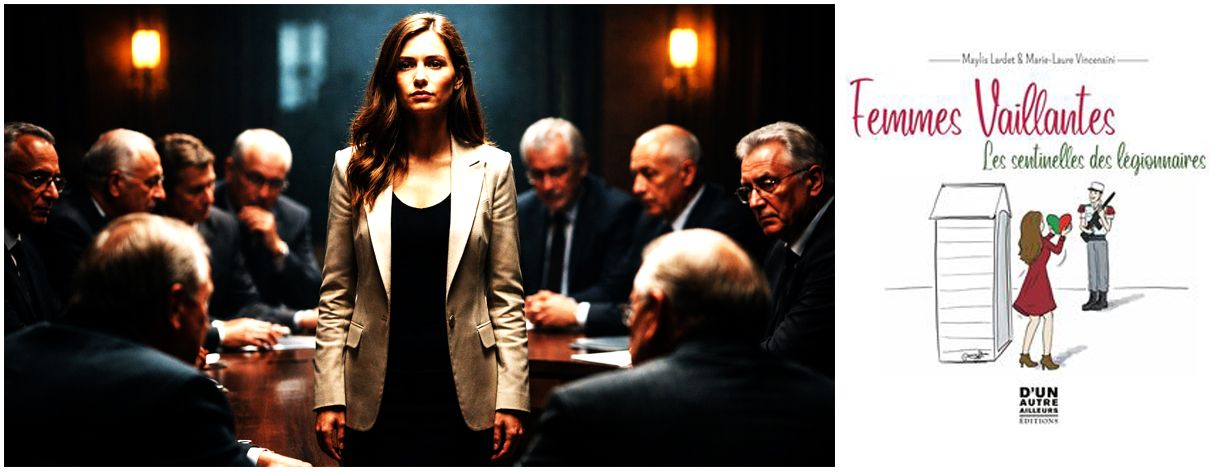
In a book about the wives and partners of legionnaires, "Valiant Women," Maylis Lardet and Marie-Laure Vincensini present a testimony that brings to light those who are in the shadows of the light within our community, our "Legion family."
Another book: "Dad, Why Are You Leaving?" Marion Maloigne's statement also answers a question posed by a child in an essential dialogue between parents and children.
But let's not get sidetracked; PyC, in his remarks, justifies, defends, and explains the reasons for a women's section within the association he presides over. This initiative is, in fact, a reaction, among other things, to a text written by an officer, the regional delegate of the FSALE (Federation of Former Legionnaires' Associations), who outlines a vision of veterans' associations that seems, as Antoine Marquet so aptly puts it, "frozen in the cement of the last century, while the world has shifted into hyper-connectivity and individual autonomy." ... Read more...
But let's not get sidetracked; PyC, in his remarks, justifies, defends, and explains the reasons for a women's section within the association he presides over. This initiative is, in fact, a reaction, among other things, to a text written by an officer, the regional delegate of the FSALE (Federation of Former Legionnaires' Associations), who outlines a vision of veterans' associations that seems, as Antoine Marquet so aptly puts it, "frozen in the cement of the last century, while the world has shifted into hyper-connectivity and individual autonomy." ... Read more...
Response to the editorial: Presentation of the white kepis
My dear veteran,
I read your words with respect… and with an emotion that only those who have worn the white kepi can truly understand.
You didn't just recount a ceremony.
You captured a spirit.
In your night in Bonifacio, in that sustained silence, in that song that ends in perfect step, everything is there: the precision, the restraint, the sobriety.
That quiet strength that has never needed to show itself to exist.
I completely share your reflection.
We embody, it is said, the calm of veteran troops.
And this calm is neither weakness nor nostalgia—it is mastery.
Mastery of gesture, of voice, of emotion.
Mastery of that unique moment when a man becomes a legionnaire, not under the gaze of others, but under the gaze of his own.
You are right: ... Read more...
The Bear Trainers
Response to the Editorial: Presentation of the White Kepis
By Antoine Marquet LC (TE-er)
I have just read with a certain emotion — should I say — the editorial by my comrade and friend Louis Perez y Cid, captain (er) by foreign title, dedicated to the awarding of white kepis to the young recruits who, from this moment on, are legionnaires in the making.
In the mid-1960s, in this same Montlaur barracks, I too received my first white kepi. The ceremony took place in a room of the building known as "la Génoise," so named because it was built by the Genoese in the 18th century. It was the room where we received some French language lessons. On our stools awaited our prestigious caps. In the center, an iron refectory table, covered with a white cloth and simply adorned with a few bottles of beer arranged without fuss.
Our section chief, Sergeant Reinhold Hornung, who recently passed away, explained to us soberly that we would now be granted leave on Sunday afternoons. He then reminded us of the value of the white kepi, the symbol it embodies, and the demand for excellence that is attached to it. Then we had a beer before gathering in the courtyard, wearing white, to sing our "Adieu vieille Europe"... Read more...
Laotian Chronicle 6/6
By Lt. Colonel (TE-er) Antoine Marquet
After a pleasant train journey, we arrived back in Vientiane and settled into the Hotel Le Charme. We felt like we'd stepped back into 1950 in this vintage hotel, with its enormous rooms and, as in all the other hotels, beds that could accommodate three or four people!
We spent the day visiting temples and a museum. We had lunch in a small restaurant run by a Frenchman. The whirring of the microwave suggested that the food was reheated, but tasty and of good quality.
In the afternoon, we continued our sightseeing until evening.
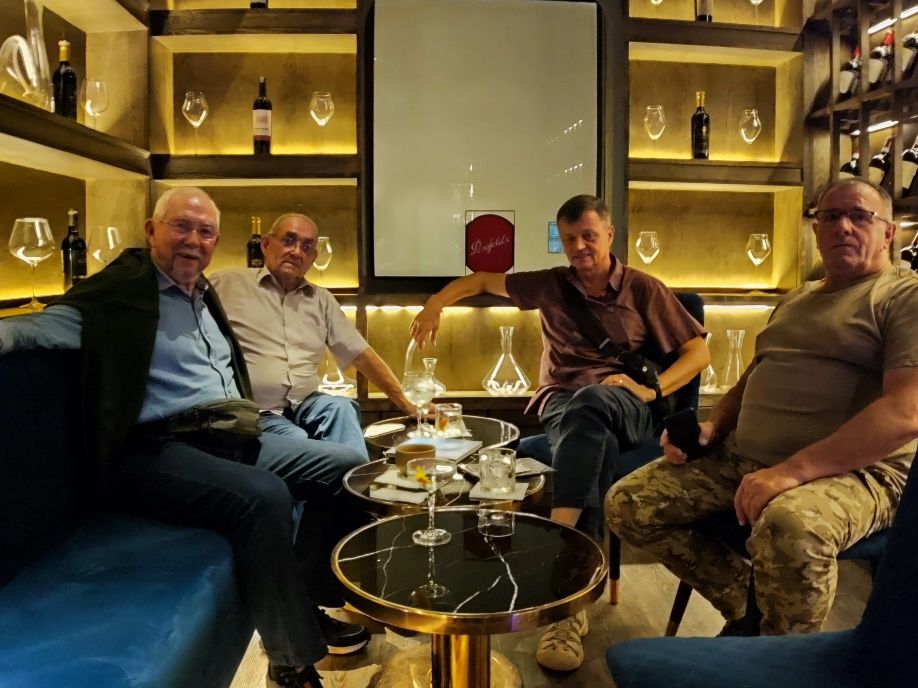
After an aperitif that turned into dinner, Jean showed us a very elegant bistro located on the first floor of a completely unassuming building. A hushed atmosphere and soft lighting pervade the various small rooms of the bistro, which features a central island where a large and efficient staff prepares the most exquisite cocktails or serves the most sought-after whiskies. I confess, though I'm not a heavy drinker, that if I lived in Vientiane, I would become a regular at this bistro! Read more...
After a pleasant train journey, we arrived back in Vientiane and settled into the Hotel Le Charme. We felt like we'd stepped back into 1950 in this vintage hotel, with its enormous rooms and, as in all the other hotels, beds that could accommodate three or four people!
We spent the day visiting temples and a museum. We had lunch in a small restaurant run by a Frenchman. The whirring of the microwave suggested that the food was reheated, but tasty and of good quality.
In the afternoon, we continued our sightseeing until evening.
After an aperitif that turned into dinner, Jean showed us a very elegant bistro located on the first floor of a completely unassuming building. A hushed atmosphere and soft lighting pervade the various small rooms of the bistro, which features a central island where a large and efficient staff prepares the most exquisite cocktails or serves the most sought-after whiskies. I confess, though I'm not a heavy drinker, that if I lived in Vientiane, I would become a regular at this bistro! Read more...
Laotian Chronicle 5/6
By Lt. Colonel (TE-er) Antoine Marquet
Last Night in Mouang Khoua
January 26, 2024
After breakfast at our usual bistro, we grabbed the bag containing the meals the owner had kindly prepared for us and left town, backpacks on, heading to the pirogue landing stage where we had reserved ours the previous afternoon.
To our surprise, the departure was delayed, and instead of a pirogue equipped with comfortable seats, we had to make do with a simple 18 cm wide plank running along the floor on either side of the boat. It was there that I received my first injury in Indochina! My head struck the metal roof of the boat. No medical evacuation, no Geneviève de Galard to treat my wound… and I am an officer, after all!
After five rather uncomfortable hours of paddling, not due to the strong current but to the narrowness of the seats which forced us to regularly shift our positions, despite our sleeping mats folded in half, then in quarters, and finally in eighths, which flattened without any regard for our backsides, we arrived in Mouang Gnoi, on the old Ho Chi Minh Trail. There are "shelter caves" in this area heavily bombed by the Americans, who emptied the bomb bays of their bombers before landing at their base... Read more...
Last Night in Mouang Khoua
January 26, 2024
After breakfast at our usual bistro, we grabbed the bag containing the meals the owner had kindly prepared for us and left town, backpacks on, heading to the pirogue landing stage where we had reserved ours the previous afternoon.
To our surprise, the departure was delayed, and instead of a pirogue equipped with comfortable seats, we had to make do with a simple 18 cm wide plank running along the floor on either side of the boat. It was there that I received my first injury in Indochina! My head struck the metal roof of the boat. No medical evacuation, no Geneviève de Galard to treat my wound… and I am an officer, after all!
After five rather uncomfortable hours of paddling, not due to the strong current but to the narrowness of the seats which forced us to regularly shift our positions, despite our sleeping mats folded in half, then in quarters, and finally in eighths, which flattened without any regard for our backsides, we arrived in Mouang Gnoi, on the old Ho Chi Minh Trail. There are "shelter caves" in this area heavily bombed by the Americans, who emptied the bomb bays of their bombers before landing at their base... Read more...

Laotian Chronicle 3/6
By Lt. Colonel (Ret.) Antoine Marquet
January 31, 1954
7:30 a.m.
Commander Cabaribère's detachment leaves Mouang Khouei in the following order: 3rd Company of the 2nd BCL, 6th Company, CCB personnel, and 7th Company.
8:15 a.m.
The Menigoz detachment leaves Kouang Rip after Commander Vaudrey and the 5th Tabor departed an hour before them.
9:00 a.m.
The scouts of the lead section of the 3rd Company of the 2nd BCL encounter a section of Viet Minh regulars marching towards Mouang Khouei. The Laotians react first and open fire, killing the three lead Viet Minh.
The enemy retaliated, and after half an hour of fighting, Lieutenant Banlier reported that his fire unit was almost exhausted. The commanding officer then ordered the 6th Company to advance past him.
Meanwhile, the enemy steadily reinforced its position, and the Debret, Bondietete, and Ducati sections, deployed on either side of the track, had to repel four successive assaults. During these attacks, the enemy left behind about fifty dead and a significant amount of weaponry. The 6th Company suffered one killed, six missing (including Lieutenant Debret), and twelve wounded, plus three wounded in the CCB (Combat Support Battalion).
The enemy was able to replace its losses, while the 6th Company, already reduced to 80 legionnaires when it left Mouang Khoua, felt the full force of the reduction, which represented a quarter of its strength, including two section leaders. It would be reinforced by the 7th Company.... Read more...
Laotian Chronicle 2/6
By Lt. Colonel (Ret.) Antoine Marquet
January 24, 2024
The discovery of this small town surprises me, but not my teammates who live in Thailand! Around 4:30 a.m., I am awakened by a dull thud, repeated with metronome-like regularity. I learn that it is the gong of the nearby temple, where we will meet some of the monks during alms collection. In place of the gong, we are treated to a speech delivered by a monotonous male voice in Lao, conveying societal, political, and undoubtedly conditioning messages to the population, who seem indifferent to this communist harangue. At the first light of dawn, stalls selling all kinds of goods line the streets. We find just about everything. Beautiful fresh vegetables plucked from their native soil, prepared dishes, tools, animals—one species in particular caught my gourmet's eye: dried rats, grilled rats… certain connoisseurs with exquisite tastes would relish them. The market visit was also very instructive: a calf had just been slaughtered right there on the ground. Butchered on the spot, it attracted a clientele of humans, but also dogs and cats. This surprised no one except us… Read more...
January 24, 2024
The discovery of this small town surprises me, but not my teammates who live in Thailand! Around 4:30 a.m., I am awakened by a dull thud, repeated with metronome-like regularity. I learn that it is the gong of the nearby temple, where we will meet some of the monks during alms collection. In place of the gong, we are treated to a speech delivered by a monotonous male voice in Lao, conveying societal, political, and undoubtedly conditioning messages to the population, who seem indifferent to this communist harangue. At the first light of dawn, stalls selling all kinds of goods line the streets. We find just about everything. Beautiful fresh vegetables plucked from their native soil, prepared dishes, tools, animals—one species in particular caught my gourmet's eye: dried rats, grilled rats… certain connoisseurs with exquisite tastes would relish them. The market visit was also very instructive: a calf had just been slaughtered right there on the ground. Butchered on the spot, it attracted a clientele of humans, but also dogs and cats. This surprised no one except us… Read more...

Laotian Chronicle 1/6
By Lt. Colonel (Ret.) Antoine Marquet
It was in June 2023 that my comrade Jean-Pierre Raoul, a retired battalion commander, first told me about his discovery, through his reading*, of deadly battles in the Mouang Khoua region of northern Laos involving the 2nd Battalion of the 3rd Foreign Infantry Regiment (3e REI) under the command of Major Cabaribère, a column of the 5th Tabor under Major Vaudrey, three companies of Laotians, and a company of auxiliaries. He decided to try to shed light on this affair by visiting the site 70 years later. To do so, he compiled a very complete and solid file on the dramatic events that led to the disappearance of the 2nd Battalion of the 3rd REI, as well as significant elements of the 5th Tabor and the Laotian Chasseurs units.
This is how two lines in a book led to a journey in the footsteps of our predecessors. Joining me were my comrade Raoul (we served together in three regiments and are from the same graduating class), General Jean Baillaud (Paratrooper) (General Rollet class), with whom I completed a year of practical training at the EAI (Air Force Training School), Corporal Jacky Biaugeaud, president of the FACS Thailand (Army Veterans Association), and myself. An administrative issue prevented Jean-Luc Martin, a Colonel (General Rollet class), from joining us. They all live in Thailand and had the good sense to invite me—I live in Portugal—to participate in this commemorative expedition.
This account aims to describe this trip while recalling the historical context of the time, established thanks to the war diary of the 2nd Battalion, 3rd Foreign Infantry Regiment (II/3e REI) and the report written by Commandant Cabaribère himself. We, former legionnaires, had never heard of this affair. January 21, 2024
After a long journey, I arrived in Vientiane, the capital of Laos, at a hotel where I was waiting for my companions to arrive the next day.
January 22, 2024
In the afternoon, we met at a lovely hotel, La Seine, on the banks of the legendary Mekong River. I hadn't seen Baillaud for 43 years, Raoul for about 30, and I was meeting Jacky Baillaud for the first time.
The walk across the city between the two hotels revealed a distinctly Eastern cleanliness and the impressive electrical and telephone wiring of this capital. That alone should make it a World Heritage Site! Read more...
It was in June 2023 that my comrade Jean-Pierre Raoul, a retired battalion commander, first told me about his discovery, through his reading*, of deadly battles in the Mouang Khoua region of northern Laos involving the 2nd Battalion of the 3rd Foreign Infantry Regiment (3e REI) under the command of Major Cabaribère, a column of the 5th Tabor under Major Vaudrey, three companies of Laotians, and a company of auxiliaries. He decided to try to shed light on this affair by visiting the site 70 years later. To do so, he compiled a very complete and solid file on the dramatic events that led to the disappearance of the 2nd Battalion of the 3rd REI, as well as significant elements of the 5th Tabor and the Laotian Chasseurs units.
This is how two lines in a book led to a journey in the footsteps of our predecessors. Joining me were my comrade Raoul (we served together in three regiments and are from the same graduating class), General Jean Baillaud (Paratrooper) (General Rollet class), with whom I completed a year of practical training at the EAI (Air Force Training School), Corporal Jacky Biaugeaud, president of the FACS Thailand (Army Veterans Association), and myself. An administrative issue prevented Jean-Luc Martin, a Colonel (General Rollet class), from joining us. They all live in Thailand and had the good sense to invite me—I live in Portugal—to participate in this commemorative expedition.
This account aims to describe this trip while recalling the historical context of the time, established thanks to the war diary of the 2nd Battalion, 3rd Foreign Infantry Regiment (II/3e REI) and the report written by Commandant Cabaribère himself. We, former legionnaires, had never heard of this affair. January 21, 2024
After a long journey, I arrived in Vientiane, the capital of Laos, at a hotel where I was waiting for my companions to arrive the next day.
January 22, 2024
In the afternoon, we met at a lovely hotel, La Seine, on the banks of the legendary Mekong River. I hadn't seen Baillaud for 43 years, Raoul for about 30, and I was meeting Jacky Baillaud for the first time.
The walk across the city between the two hotels revealed a distinctly Eastern cleanliness and the impressive electrical and telephone wiring of this capital. That alone should make it a World Heritage Site! Read more...
IRVIN Initiating the Revolution of Life through Nature Immersion
or the art of empowering young people
By Louis Perez y Cid
Some journeys leave a lasting impression. My friend Patrice Valantin's is one of them. A former officer in the French Foreign Legion and an entrepreneur in ecological engineering, he could have pursued a comfortable path. In 2012, he chose a different route:
to dedicate himself to young people who have lost their way and to create IRVIN.
IRVIN is not a training center like any other. It is a place of rebuilding. A space where one relearns how to get up in the morning, how to be part of a group, how to find meaning in effort, and how to envision the future.
Some journeys leave a lasting impression. My friend Patrice Valantin's is one of them. A former officer in the French Foreign Legion and an entrepreneur in ecological engineering, he could have pursued a comfortable path. In 2012, he chose a different route:
to dedicate himself to young people who have lost their way and to create IRVIN.
IRVIN is not a training center like any other. It is a place of rebuilding. A space where one relearns how to get up in the morning, how to be part of a group, how to find meaning in effort, and how to envision the future.
.jpg?t=5881b08c_8d44_4a67_a1c5_38e517214e4a)
A practical path for working life

The Nobility of Service
Some images come and go, while others take root.
Innocent titles, and titles that work in silence.
The nobility of service.
It's beautiful. It's clean. It sounds good under the kepis and in the drawing rooms.
And on the cover of a diary, a familiar figure, a legionnaire. Well… almost.
On a crowned head, a royal beard. Perfect superimposition. The soldier and the king become one. A graphic coincidence, no doubt. Chance sometimes has a great deal of imagination.
_(1).jpg?t=5881b08c_8d44_4a67_a1c5_38e517214e4a)
Let's add to that Camerone 2026, which, it is said, is placed under the sign of the princely family of Monaco, one of whose ancestors served in the Legion. Here again, nothing to criticize, the story is accurate, respectable, even elegant. The Legion never forgets those who have worn its colors. And rightly so.
But the lucid madman has a flaw: he observes alignments, symbols, resonances.
A legionnaire serving a king. Service associated with nobility.
A princely family summoned into the narrative. Read more...
But the lucid madman has a flaw: he observes alignments, symbols, resonances.
A legionnaire serving a king. Service associated with nobility.
A princely family summoned into the narrative. Read more...
Without a Kepi, But Not Without Loyalty
The following text is driven by a sincere loyalty to the institution and a concern for consistency in the functioning of the veterans' associations. It directly addresses a question often avoided: the actual place given to supporters.
This reflection is neither polemical nor iconoclastic. It simply highlights certain contradictions in a discourse that advocates welcoming newcomers while sometimes reducing civic engagement to an essentially material benefit. The argument may be unsettling, but it remains grounded in respect, logic, and a spirit of fraternity.
This text by Antoine is addressed to all those who keep the veterans' associations alive, former legionnaires and supporters alike, and invites a clear-sighted, open, and honest reading, in service of a tradition that can only be preserved by remaining true to its human values.
Louis Perez y Cid
This reflection is neither polemical nor iconoclastic. It simply highlights certain contradictions in a discourse that advocates welcoming newcomers while sometimes reducing civic engagement to an essentially material benefit. The argument may be unsettling, but it remains grounded in respect, logic, and a spirit of fraternity.
This text by Antoine is addressed to all those who keep the veterans' associations alive, former legionnaires and supporters alike, and invites a clear-sighted, open, and honest reading, in service of a tradition that can only be preserved by remaining true to its human values.
Louis Perez y Cid
Serving Without Belonging: The Place of Supporters in Veterans' Associations
By Antoine Marquet, Lieutenant-Colonel (TE-er).
Dear Supporters,
Upon careful reading of the text on "welcoming young former legionnaires," produced as a "working document" by a regional leader of Legion veterans' associations, one constant emerges: the place accorded to non-legionary supporters is simultaneously marginal, distrustful, and fundamentally utilitarian.
Certainly, the text is intended to be reassuring. Supporters are described as "discreet," "friendly," and "useful." But this superficial goodwill never withstands the general argument for long, which invariably reduces them to a single function: to financially and logistically compensate for the erosion of legionary numbers. Read more...
Dear Supporters,
Upon careful reading of the text on "welcoming young former legionnaires," produced as a "working document" by a regional leader of Legion veterans' associations, one constant emerges: the place accorded to non-legionary supporters is simultaneously marginal, distrustful, and fundamentally utilitarian.
Certainly, the text is intended to be reassuring. Supporters are described as "discreet," "friendly," and "useful." But this superficial goodwill never withstands the general argument for long, which invariably reduces them to a single function: to financially and logistically compensate for the erosion of legionary numbers. Read more...
Veterans' Associations Facing the Challenge of the 21st Century
Christian's article, "Dare to Think Differently," encouraged a break with entrenched certainties and the acceptance that reflection on veterans' associations and veterans' associations can no longer be satisfied with dogmas inherited from the past. It paved the way for a necessary debate, based on questioning and intellectual courage.
Antoine's text, which follows, continues in this vein but goes further by confronting the stated principles with the concrete realities of veterans' associations in the 21st century. Its author highlights the contradictions of a discourse that claims to revitalize while refusing to adapt to social, human, and territorial changes.
This is neither about denying the heritage nor weakening the Legionnaire identity, but about remembering that an institution that demands adherence without freedom and loyalty without listening risks isolation. This contribution is intended as a clear-eyed warning, in service of vibrant, useful associations faithful to the spirit of fraternity they claim to uphold.
Louis Perez y Cid.
Between Dogma and Reality
By Antoine Marquet (Lt. Colonel TE – er)
The text currently circulating, penned by a general officer, paints a picture of veterans' associations that seems frozen in the cement of the last century. In 2026, as the world has shifted towards hyper-connectivity, mobility, and individual autonomy, this project of "taking back control" resembles more of a semantic utopia than a concrete response to the realities on the ground. Read more...
The text currently circulating, penned by a general officer, paints a picture of veterans' associations that seems frozen in the cement of the last century. In 2026, as the world has shifted towards hyper-connectivity, mobility, and individual autonomy, this project of "taking back control" resembles more of a semantic utopia than a concrete response to the realities on the ground. Read more...
Dare to Think Differently
The reactions sparked by writings on the JAL reveal less a simple disagreement than a deeper difficulty in accepting the plurality of perspectives. Faced with positions often asserted as self-evident truths, it became necessary to open a space for free reflection, liberated from dogma and postures of moral authority.
Here, we do not seek to decide, much less to oppose, but to reiterate a fundamental requirement: no experience, however respectable, can be transformed into an immutable truth. Refusing debate, or forcing it, amounts to freezing an institution that cannot survive without lucidity and self-questioning.
This text by Christian is part of this desire to question, sometimes to raise awareness, and to defend the idea that honoring heritage does not preclude doubt or evolution. Quite the contrary.
Louis Perez y Cid
Here, we do not seek to decide, much less to oppose, but to reiterate a fundamental requirement: no experience, however respectable, can be transformed into an immutable truth. Refusing debate, or forcing it, amounts to freezing an institution that cannot survive without lucidity and self-questioning.
This text by Christian is part of this desire to question, sometimes to raise awareness, and to defend the idea that honoring heritage does not preclude doubt or evolution. Quite the contrary.
Louis Perez y Cid
Sapere Aude*
By Christian Morisot.
It is important to give one's opinion, to react freely and personally to the numerous written comments on the "JAL" (Journal d'Appel à Ligne - Legal Advice Journal) which have sparked a real controversy among the self-proclaimed "guardians of the temple." I cannot remain indifferent, but I question the criteria that should be applied, the true value on which our responses should be based, considering that, by the principle of precaution, there is never absolute truth in what we assert. In short, each participant offers their very personal opinion, drawing on their own experiences, in a variety of conclusions and assertions imposed by biased opinions that demonstrate a lack of fairness. Read more...
It is important to give one's opinion, to react freely and personally to the numerous written comments on the "JAL" (Journal d'Appel à Ligne - Legal Advice Journal) which have sparked a real controversy among the self-proclaimed "guardians of the temple." I cannot remain indifferent, but I question the criteria that should be applied, the true value on which our responses should be based, considering that, by the principle of precaution, there is never absolute truth in what we assert. In short, each participant offers their very personal opinion, drawing on their own experiences, in a variety of conclusions and assertions imposed by biased opinions that demonstrate a lack of fairness. Read more...
AALE and JAL: Evolution?
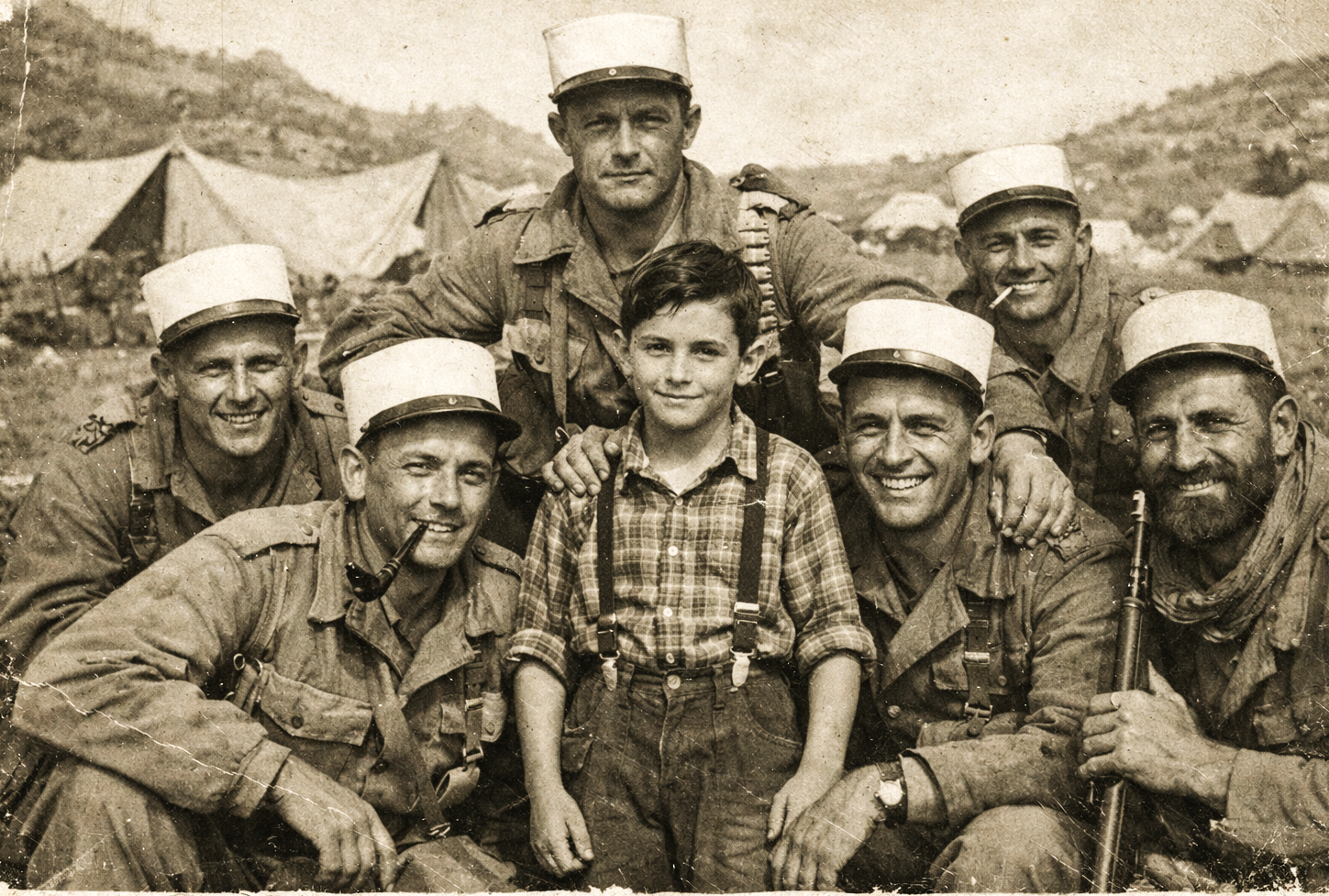
Between impeccably organized traditions… and evolutions that overflow the boundaries. Associations of former legionnaires were created to bring together those who have experienced something that can never truly be explained to others. A story of mud, fatigue, brotherhood… and memories that are only half-told, because the other half is either guessed or left unsaid.
Officially, they talk about ceremonies, flags, and traditions. Unofficially, everyone knows that the essence lies elsewhere: in the phone call made at the right moment, the drink shared for no good reason, and that strange connection that sometimes allows you to understand each other without finishing sentences. In short, the Legion spirit doesn't reside in statutes. It circulates among people and likes to take shortcuts.
Each association has its own character. Garrison town, deep countryside, or remote corner of the world, each tells a different story. This is what makes them so valuable… and sometimes leads to endless meetings.
Officially, they talk about ceremonies, flags, and traditions. Unofficially, everyone knows that the essence lies elsewhere: in the phone call made at the right moment, the drink shared for no good reason, and that strange connection that sometimes allows you to understand each other without finishing sentences. In short, the Legion spirit doesn't reside in statutes. It circulates among people and likes to take shortcuts.
Each association has its own character. Garrison town, deep countryside, or remote corner of the world, each tells a different story. This is what makes them so valuable… and sometimes leads to endless meetings.
Young Veterans (JAL): The Question That Always Comes Up
Lili Marlène, a Tale from History.
By Louis Perez y Cid
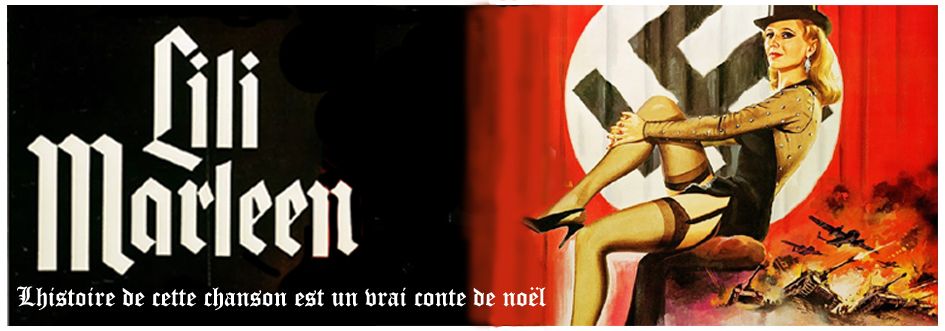
One evening in 1915, in a world that had just plunged into the Great War, a young German soldier named Hans Leip* was preparing to leave the city to join the front.
He was a poet, enlisted out of a sense of duty.
He walked slowly toward the exit of the barracks, his heart heavy.
Under a lantern, at a street corner, a young woman was waiting for him.
The light cast a trembling halo around her, like a promise.
They said goodbye, simply, without knowing if they would ever see each other again.
That evening, Hans engraved this image in his heart.
From this emotion was born a poem, "Lied eines jungen Wachpostens," in English, Song of a Young Sentry. A few lines about a soldier on duty, thinking of the one he loved under the lantern. He gives it a name: Lili Marleen, a blend of two first names, two memories, two women who were important to him. But, out of superstition, he doesn't write the last stanza. Fate will choose it.
Then the war sweeps everything away. Nine million dead and missing. Twenty-one million wounded. And, as if that weren't enough, the Spanish flu claims forty million more lives, five percent of humanity.
The poem, however, remains in a drawer, forgotten like a secret of the soul.
The years pass. Read more...
One evening in 1915, in a world that had just plunged into the Great War, a young German soldier named Hans Leip* was preparing to leave the city to join the front.
He was a poet, enlisted out of a sense of duty.
He walked slowly toward the exit of the barracks, his heart heavy.
Under a lantern, at a street corner, a young woman was waiting for him.
The light cast a trembling halo around her, like a promise.
They said goodbye, simply, without knowing if they would ever see each other again.
That evening, Hans engraved this image in his heart.
From this emotion was born a poem, "Lied eines jungen Wachpostens," in English, Song of a Young Sentry. A few lines about a soldier on duty, thinking of the one he loved under the lantern. He gives it a name: Lili Marleen, a blend of two first names, two memories, two women who were important to him. But, out of superstition, he doesn't write the last stanza. Fate will choose it.
Then the war sweeps everything away. Nine million dead and missing. Twenty-one million wounded. And, as if that weren't enough, the Spanish flu claims forty million more lives, five percent of humanity.
The poem, however, remains in a drawer, forgotten like a secret of the soul.
The years pass. Read more...
History's Warnings
The following lines are based on key facts, dates, and episodes from our recent history.
Christian reminds us how certain political decisions, strategic compromises, and collective blindness have shaped France into what it is today.
On several occasions, our country has ignored the warning signs offered by events, from the end of colonial empires to contemporary identity crises, from postwar reconstruction to the fractures of the present.
These reminders seek neither automatic agreement nor the comfort of consensus; they aim to place our debates within the context of events.
Understanding history is not a nostalgic exercise; it is what prevents us from repeating the same mistakes.
Our friend wrote this text to reactivate this vigilance, not to create controversy, but to awaken collective memory.
For a nation that ceases to question its past allows others to write its future.
Louis Perez y Cid
Christian reminds us how certain political decisions, strategic compromises, and collective blindness have shaped France into what it is today.
On several occasions, our country has ignored the warning signs offered by events, from the end of colonial empires to contemporary identity crises, from postwar reconstruction to the fractures of the present.
These reminders seek neither automatic agreement nor the comfort of consensus; they aim to place our debates within the context of events.
Understanding history is not a nostalgic exercise; it is what prevents us from repeating the same mistakes.
Our friend wrote this text to reactivate this vigilance, not to create controversy, but to awaken collective memory.
For a nation that ceases to question its past allows others to write its future.
Louis Perez y Cid
Opinion
By Christian Morisot
Like many of us, our ideas, convictions, and commitments begin in our minds, very early and at a young age, through our reading. In fact, it all started when I realized that it was sometimes wise to seek a change of scenery when the surrounding air is saturated with mediocrity. Today, as I write this letter to you, I know from experience that writing is a commitment, that a "violence of the pen" is a boldness that attracts some fervent sympathy and, unfortunately, a great deal of hatred. Read more...
Like many of us, our ideas, convictions, and commitments begin in our minds, very early and at a young age, through our reading. In fact, it all started when I realized that it was sometimes wise to seek a change of scenery when the surrounding air is saturated with mediocrity. Today, as I write this letter to you, I know from experience that writing is a commitment, that a "violence of the pen" is a boldness that attracts some fervent sympathy and, unfortunately, a great deal of hatred. Read more...
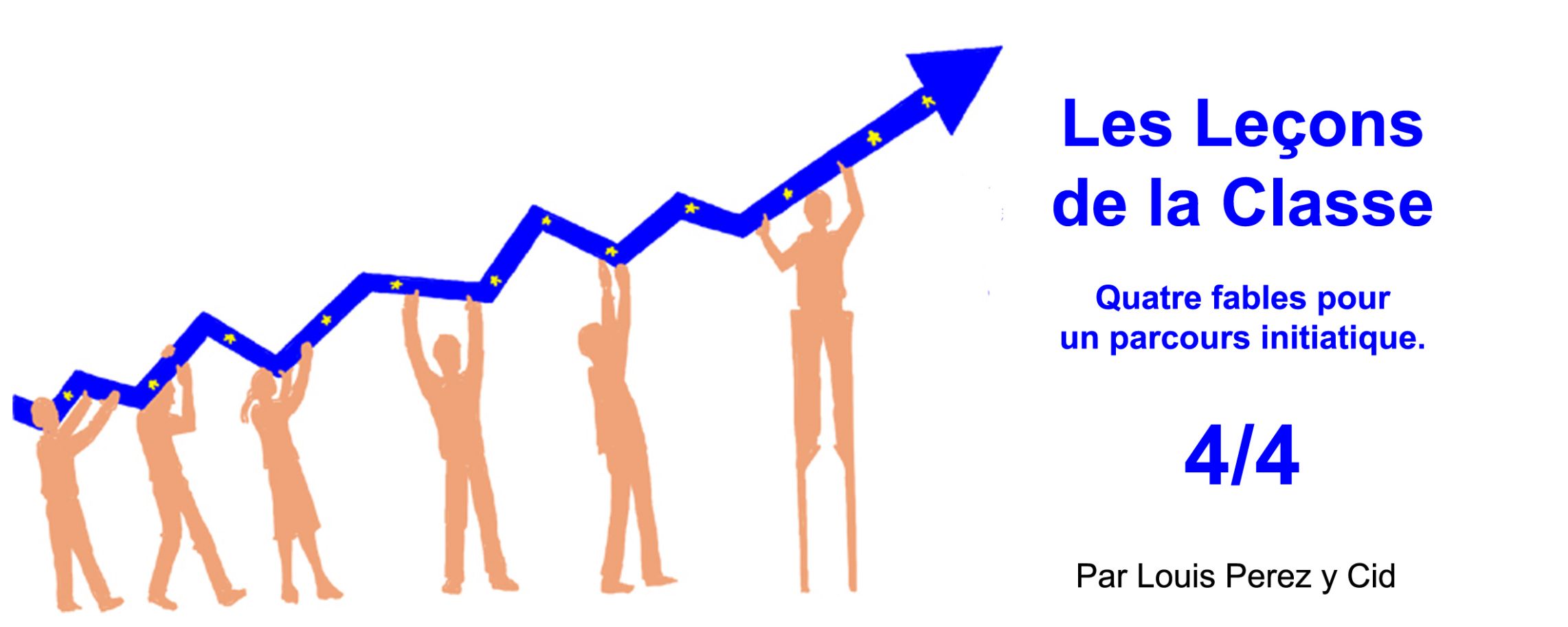
Classroom Lessons 4/4
The European class?
The term ended.
The teacher gathered his students one last time, now mature enough to reflect.
"You have seen three models," he said.
"Equality without effort, competition without limits, and the balance of shared merit.
This path, my children, is that of our continent." He stood up, his expression grave.
"France believed in equality, the United Kingdom in merit,
the Nordic countries found a certain balance.
But tomorrow, what if we managed to unite these forces beyond national borders? Read more...
The teacher gathered his students one last time, now mature enough to reflect.
"You have seen three models," he said.
"Equality without effort, competition without limits, and the balance of shared merit.
This path, my children, is that of our continent." He stood up, his expression grave.
"France believed in equality, the United Kingdom in merit,
the Nordic countries found a certain balance.
But tomorrow, what if we managed to unite these forces beyond national borders? Read more...

Classroom Lessons 3/4
The Fair Classroom
A few weeks later, the teacher proposed a third model.
“We’re going to try a fairer system. Merit will count, but so will solidarity.” The students looked at each other, intrigued.
“Your grades,” he explained, “will depend half on your personal effort and half on the class average. You’re all connected, just like in real life.”
On the first test, everyone worked together, helping each other, discussing, and reviewing as a group. Marie explained, Lucas persevered, and Tom finally listened.
The average rose to 14.
On the second test, some students slacked off, and the average dropped to 10.
But instead of complaining, the class reacted.
They organized themselves, supported each other, and bonded.
Little by little, everyone found their place. Read more...
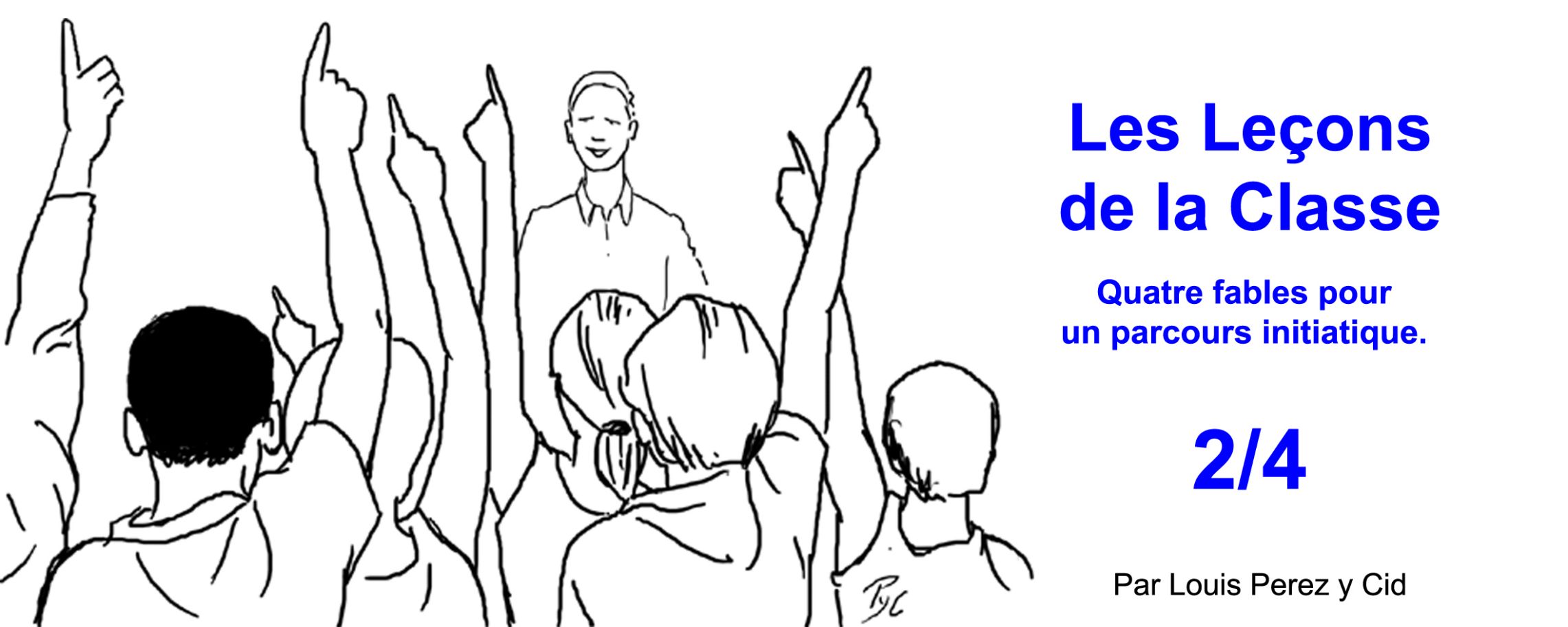
Classroom Lessons 2/4
The Elite Class
In the same peaceful school, the following day, the economics teacher wanted to show the other extreme.
“In previous lessons, we looked at socialism,” he said.
“Today, let’s talk about capitalism, the justice of merit. Here, there will be no artificial equality; only effort will count. Work will be rewarded, mediocrity condemned.”
A heavy silence fell.
Marie, lively and bright, felt her blood boil; she wanted to win.
Lucas, tenacious but ordinary, felt anxiety creeping in.
Tom, dreamy and distracted, lowered his head; he sensed his defeat.
The first test was a shock; the best students triumphed, the others fell.
The second test turned into an arena. Some trembled, others rejoiced.
The third test ... Read more...
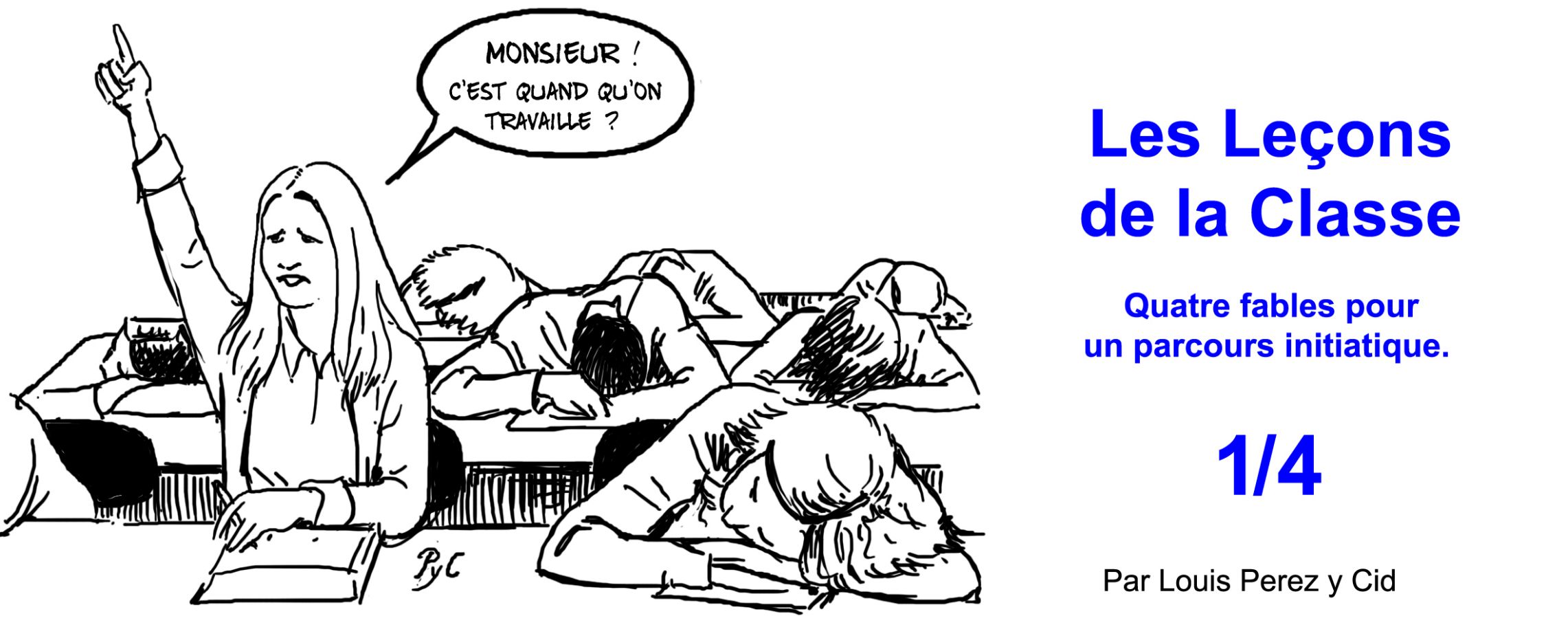
Classroom Lessons 1/4
School as a Mirror of the World
I received an email from a friend with an attachment, intended for wide distribution. No signature, no context: this initially inspired a certain repulsion in me. Nevertheless, I opened the document.
It described the supposedly “egalitarian” experiment of a middle school class, presented as a miniature version of our society—a highly caricatured vision, of course.
Upon reading it, it became clear to me that the opposite could just as easily be demonstrated.
This is how I came up with the idea of rewriting this text through four educational experiments conducted by an economics teacher. He invites his students to experience, from the inside, the major models that govern our nations: absolute equality, pure merit, the balance between the two, and then the union of forces in service of a common ideal.
One experiment per day. Read more...