





All this is happening above our heads
I'd like to call the number 22 in Asnières
By Michel Gravereau
Fernand Raynaud is still remembered for his sketch, "The number 22 in Asnières," where he desperately tried to make a phone call.
How ridiculous that seems today, in a world where children are practically born with the latest generation of cell phones in their cribs.
Telling our grandchildren about the epic journey a phone call represented in our youth is like taking a trip down memory lane, prompting an inquisitive look from them. "Are you sure you didn't take any drugs, Grandpa?"
Let's try to remember a few moments from our past.
The fledgling television service tried to keep us informed about Sunday's sports results, sometimes with footage filmed in stadiums, but sometimes we only got the score because the presenter at the time, Robert Chappatte or Roger Couderc, apologized for the report not arriving. The results of the horse races weren't any more reliable because the computers of the time lacked processing power.
It was for those who owned a television at home, the privileged few. Some evenings, invitations were extended to each other's homes to watch "La Piste aux étoiles" (The Circus Ring). I remember the 1958 World Cup in Sweden, where the whole village gathered on the sidewalk in front of Mr. Schwartzkoff's television shop window. That devil Pelé had really hurt us!
Since we're all, in our old age, reminiscing about the defining moments of our lives, how could I not mention my eighth birthday? It wasn't in front of the television that my father was standing—we didn't have one—but next to his radio, a large wooden cabinet whose sound, long before frequency modulation, regularly cut out and returned whenever it felt like it. The atmosphere in the house was rather gloomy despite it being his birthday. I can still picture him, turning away from the radio, pale-faced, telling my mother, "It's over in Indochina. Dien Bien Phu has fallen." I was born on May 7th. Only a mental illness could make me forget that day.
I'm convinced that each of us has a ton of childhood memories to share related to the communications of that era.
A little history of telecommunications:
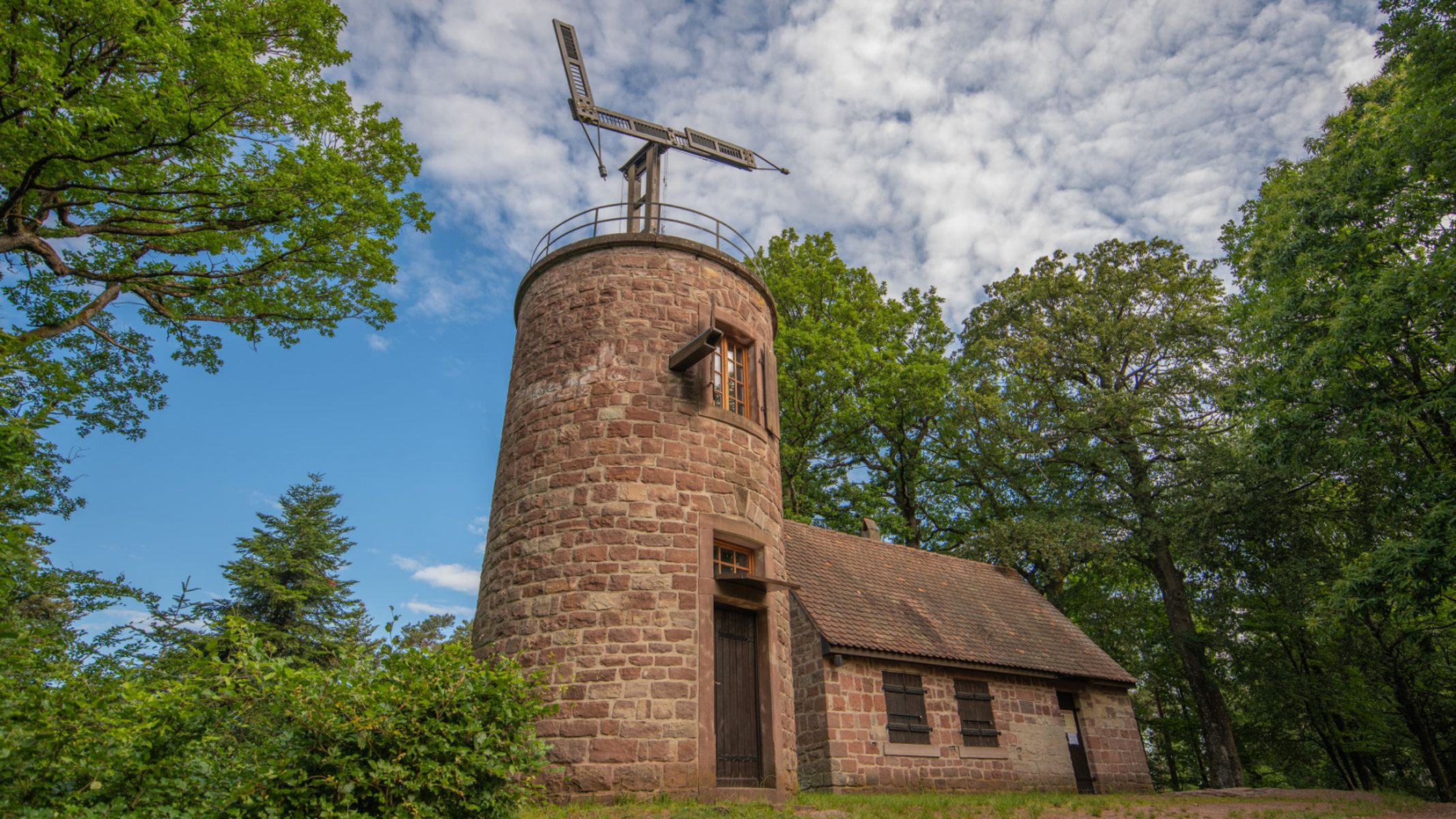
• 1792, Claude Chappe presents the first optical telegraph;
• 1837, the electric telegraph appears;
• 1868, first transatlantic communication;
• 1877, first telephone conversation;
• 1935, the advent of modern television.
On October 4, 1957, the Soviets successfully launched a large sphere, 80 cm in diameter, into orbit around the Earth. This sphere, which emitted a "beep-beep" sound, would pave the way for a modern world, single-handedly creating a technological revolution whose consequences and limitations were not yet fully understood at the time.
On July 10, 1962, the Americans launched the first telecommunications satellite, Telstar, identical in every respect to Sputnik.
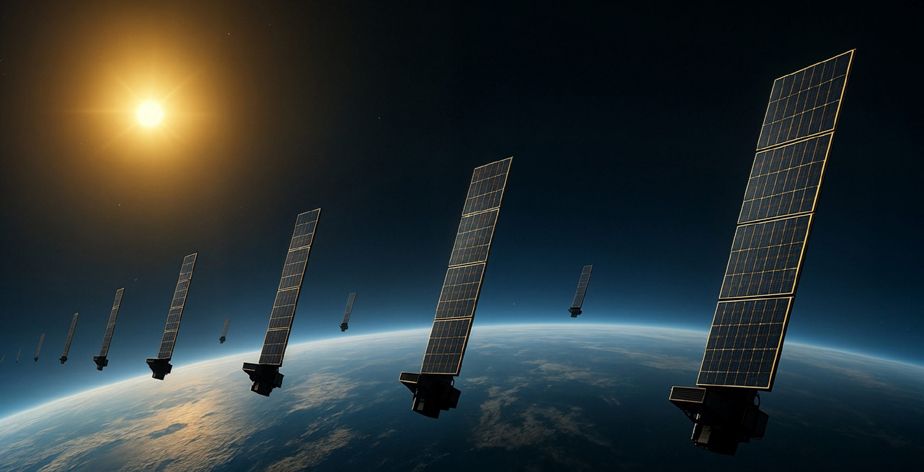
Looking for stars and planets in the evening, our eyes are inevitably drawn to small points of light moving in all directions. Look, a satellite. Then another. It's a constant ballet. And it's not over yet.
All these satellites help terrestrial structures that can be damaged, particularly during storms. Let's not forget that some areas on Earth are not covered (areas without coverage). And yet, the need for human communication arose from the very beginning. Smoke, light signals, shouts, running (like in the Marathon), and the telegraph were its precursors.
But it was absolutely essential to eliminate wires between terrestrial transmitters and receivers. Hence the use of electromagnetic waves in the 20th century, which allow information to be transmitted without cables.
Satellite telecommunications comprises one or more interconnected satellites (a constellation), ground stations, and receivers.
Since we're all, in our old age, reminiscing about the defining moments of our lives, how could I not mention my eighth birthday? It wasn't in front of the television that my father was standing—we didn't have one—but next to his radio, a large wooden cabinet whose sound, long before frequency modulation, regularly cut out and returned whenever it felt like it. The atmosphere in the house was rather gloomy despite it being his birthday. I can still picture him, turning away from the radio, pale-faced, telling my mother, "It's over in Indochina. Dien Bien Phu has fallen." I was born on May 7th. Only a mental illness could make me forget that day.
I'm convinced that each of us has a ton of childhood memories to share related to the communications of that era.
A little history of telecommunications:
• 1792, Claude Chappe presents the first optical telegraph;
• 1837, the electric telegraph appears;
• 1868, first transatlantic communication;
• 1877, first telephone conversation;
• 1935, the advent of modern television.
On October 4, 1957, the Soviets successfully launched a large sphere, 80 cm in diameter, into orbit around the Earth. This sphere, which emitted a "beep-beep" sound, would pave the way for a modern world, single-handedly creating a technological revolution whose consequences and limitations were not yet fully understood at the time.
On July 10, 1962, the Americans launched the first telecommunications satellite, Telstar, identical in every respect to Sputnik.
Looking for stars and planets in the evening, our eyes are inevitably drawn to small points of light moving in all directions. Look, a satellite. Then another. It's a constant ballet. And it's not over yet.
All these satellites help terrestrial structures that can be damaged, particularly during storms. Let's not forget that some areas on Earth are not covered (areas without coverage). And yet, the need for human communication arose from the very beginning. Smoke, light signals, shouts, running (like in the Marathon), and the telegraph were its precursors.
But it was absolutely essential to eliminate wires between terrestrial transmitters and receivers. Hence the use of electromagnetic waves in the 20th century, which allow information to be transmitted without cables.
Satellite telecommunications comprises one or more interconnected satellites (a constellation), ground stations, and receivers.

For satellite internet, antennas several meters in diameter are connected to the terrestrial internet network. These antennas collect information and transmit it to satellites orbiting the Earth via electromagnetic signals. Satellites detect this signal, amplify it, and send it back towards Earth. To receive it, you simply need to install a satellite dish for television or a modem at home. Anywhere in the world, without any fiber optic connection, it is thus possible to surf the internet. Whether you are in the mountains, in the air, or at sea, the connection is always available. Even in times of war or critical situations such as natural disasters, security is paramount. Operators guarantee an interference-free connection or interception. Very important for the Armed Forces or civil security.
Satcoms, telecommunications satellites
Our Ariane 5 rocket has placed numerous telecommunications satellites, known as Satcoms, into orbit. They represent two-thirds of our launches.
The most modern and powerful ever built in Europe, the Konnect VHTS satellite, launched in 2022, is powered by electrical energy supplied by its solar panels. The satellite's weight is considerably reduced: a significant gain, as every gram counts during a rocket launch!
Satcoms, telecommunications satellites
Our Ariane 5 rocket has placed numerous telecommunications satellites, known as Satcoms, into orbit. They represent two-thirds of our launches.
The most modern and powerful ever built in Europe, the Konnect VHTS satellite, launched in 2022, is powered by electrical energy supplied by its solar panels. The satellite's weight is considerably reduced: a significant gain, as every gram counts during a rocket launch!

36,000 km from Earth
Each telecommunications satellite is placed in a very specific orbit.
Geostationary satellites are positioned at an altitude of approximately 36,000 km above the Earth. They orbit at the same speed as the Earth rotates on its axis. In short, if you point a geostationary satellite at a stationary object in the sky, you won't see it move. They weigh between 3.5 and 7 tons at launch.
Constellations of minisatellites. These satellites are closer to Earth: they are placed in low Earth orbit, at altitudes of 400 to 2,000 km. They are deployed in constellations, meaning a fleet of satellites. They are called minisatellites because of their very light weight, between 150 and 800 kg at launch. The Eutelsat Oneweb broadband internet service belongs to this category; it is composed of 648 minisatellites. In recent years, the average altitude at which satellites are launched has decreased significantly due to the number of Satcom satellites placed in low Earth orbit.
The Starlink constellation. Finally, we cannot avoid mentioning Elon Musk's influence on our night sky. Trains of satellites sometimes crisscross the sky after being launched by SpaceX. These are Starlink satellites.
Each telecommunications satellite is placed in a very specific orbit.
Geostationary satellites are positioned at an altitude of approximately 36,000 km above the Earth. They orbit at the same speed as the Earth rotates on its axis. In short, if you point a geostationary satellite at a stationary object in the sky, you won't see it move. They weigh between 3.5 and 7 tons at launch.
Constellations of minisatellites. These satellites are closer to Earth: they are placed in low Earth orbit, at altitudes of 400 to 2,000 km. They are deployed in constellations, meaning a fleet of satellites. They are called minisatellites because of their very light weight, between 150 and 800 kg at launch. The Eutelsat Oneweb broadband internet service belongs to this category; it is composed of 648 minisatellites. In recent years, the average altitude at which satellites are launched has decreased significantly due to the number of Satcom satellites placed in low Earth orbit.
The Starlink constellation. Finally, we cannot avoid mentioning Elon Musk's influence on our night sky. Trains of satellites sometimes crisscross the sky after being launched by SpaceX. These are Starlink satellites.
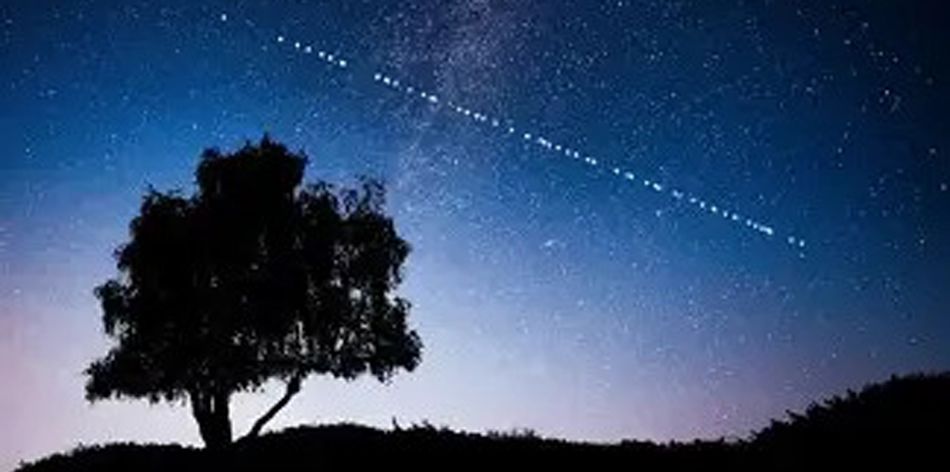
With 30 to 40 satellites launched at a time, a network is established around the Earth, at an altitude of 550 km, to provide 5G to users. SpaceX plans to deploy 42,000 of them by the end of its program. The possibility of satellite collisions in low Earth orbit was already being considered, and needless to say, the problem is becoming increasingly prevalent.
Thus, we no longer need to request a correspondent in Asnières from New York. We know in real time what is happening in the world and experience events live, as if we were there.
Still true to our nostalgia for better times, without necessarily following the frenetic pace of our fellow citizens, we must blend the undeniable marks of technological progress with the indelible traces of the past: let us take the time, at night, to watch the satellites that keep our beloved Earth's lifeblood beating, and contemplate our silent, soothing stars.
Carpe Diem.
Thus, we no longer need to request a correspondent in Asnières from New York. We know in real time what is happening in the world and experience events live, as if we were there.
Still true to our nostalgia for better times, without necessarily following the frenetic pace of our fellow citizens, we must blend the undeniable marks of technological progress with the indelible traces of the past: let us take the time, at night, to watch the satellites that keep our beloved Earth's lifeblood beating, and contemplate our silent, soothing stars.
Carpe Diem.